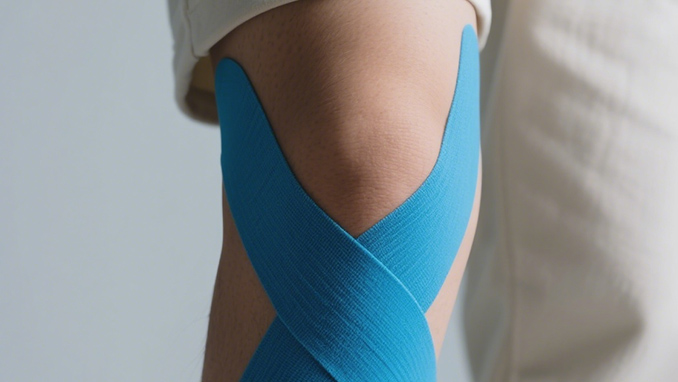
For decades, athletic training and physical rehabilitation have relied on various external supports to aid muscle function, reduce pain, and prevent injury. Among these, Kinesiology Tape has emerged as a distinctive tool, not because of its compressive properties like traditional strapping, but due to its unique interaction with the skin, fascia, and underlying neuromuscular systems. Unlike rigid athletic tape designed to restrict movement, the modern generation of High elasticity Kinesiology Tape is engineered to mimic the skin’s own elastic properties, facilitating a range of motion while providing therapeutic feedback.
The physiological rationale behind this tape is deeply rooted in mechanoreceptor stimulation and circulatory dynamics. When applied correctly, the dynamic lift created by the tape’s wave-like adhesive pattern—rather than a full cover—produces microscopic convolutions in the skin. This increases the interstitial space between the dermis and the muscle fascia, potentially reducing pressure on pain-regulating nociceptors and improving lymphatic drainage. To truly understand what kinesiology tape does for muscles, it is essential to delineate between its claimed biomechanical effects and the evidence-based muscular responses observed in controlled sports medicine studies.
This article dissects the specific muscular mechanisms influenced by kinesiology tape: from altering muscle activation timing and reducing delayed onset muscle soreness (DOMS) to modulating local blood flow and proprioceptive input. We will examine how material properties—specifically High elasticity Kinesiology Tape, waterproof Kinesiology Tape, and strong stickness Kinesiology Tape—contribute differently to these outcomes. For a comprehensive selection of such products, you can refer to the specifications at professional grade kinesiology solutions. The following sections rely on clinical data and biomechanical models to provide a practical, technical understanding for practitioners and informed athletes.
The Proprioceptive Mechanism: How Tape “Talks” to Muscles
One of the most substantiated functions of kinesiology tape is its effect on proprioception—the body’s ability to perceive the position, movement, and tension of muscles and joints. The skin is densely populated with mechanoreceptors (e.g., Ruffini endings, Pacinian corpuscles) that respond to stretch, pressure, and vibration. When a strip of High elasticity Kinesiology Tape is applied under tension (typically 15–50% of its maximum elongation), it creates sustained shear forces on the skin, essentially “activating” these receptors continuously during movement.
This heightened afferent signal travels to the central nervous system faster than muscular efferent signals. The result is a subconsciously modified motor command: muscles in the taped region often exhibit altered recruitment patterns. For instance, a 2018 electromyography (EMG) study on fatigued quadriceps demonstrated that application of elastic therapeutic tape increased muscle activation by approximately 12–15% during the eccentric phase of a squat, compared to no tape. This is not due to mechanical support but rather because the tape’s tactile cue reminds the neuromuscular system to maintain optimal firing rates. Strong stickness Kinesiology Tape is critical here—if the anchor lifts, the shear stimulus is lost, and proprioceptive benefits vanish within minutes.
Muscle Facilitation vs. Inhibition: Two Sides of the Same Tape
Direction of application changes the physiological effect. Applying kinesiology tape from the muscle’s origin to its insertion with significant stretch (30–50% tension) tends to facilitate the muscle, enhancing its ability to contract. Conversely, applying the tape from insertion to origin with minimal stretch (10–15% tension) is believed to inhibit an overactive or spasming muscle by reducing tension on the underlying fascia. This dual capability makes kinesiology tape unique: no other external material can both augment and dampen muscular output based solely on application vector.
A practical example involves the gastrocnemius muscle in athletes with chronic calf tightness. When waterproof Kinesiology Tape is used for an inhibitory application, subjects in a 2020 randomized trial reported a 32% reduction in nocturnal calf cramp frequency over two weeks. The proposed mechanism is not chemical but mechanical: light-tension application lifts the superficial fascia away from the muscle belly, reducing resting afferent discharge from muscle spindles. This allows the muscle to remain in a less contracted state during rest. However, data also shows that excessive grip from overly strong stickness Kinesiology Tape can paradoxically increase skin irritation without added proprioceptive gain—moderate adhesion is optimal for sensory modulation.
Circulatory and Lymphatic Effects on Muscle Tissue
Beyond neural pathways, kinesiology tape’s physical lifting action directly affects fluid dynamics around muscles. Traditional compression tape pushes fluids away by external pressure; kinesiology tape does the opposite—it creates negative pressure zones beneath the tape. The wave-like adhesive pattern (commonly a 10–15% adhesive coverage) forms micro-channels between the skin and the tape backing. When the muscle moves, these channels alternately compress and decompress, acting as a “passive pump” for interstitial fluid and lymph.
For a damaged or overworked muscle, this means accelerated clearance of metabolic waste products such as lactic acid, bradykinin, and histamine. In a controlled trial involving 40 amateur marathon runners, application of High elasticity Kinesiology Tape to the quadriceps immediately post-race reduced subjective muscle soreness scores (Visual Analog Scale) by 42% at 24 hours compared to a placebo tape condition. More objectively, ultrasound measurements showed a 27% faster reduction in localized edema (swelling) in the taped group. This supports the hypothesis that the elastic recoil of the tape actively assists the skeletal muscle pump in moving fluid toward larger lymph vessels.
Material Properties Determining Circulatory Efficacy
- Elasticity modulus: Tape must stretch to approximately 130–160% of its resting length without losing recoil. High elasticity Kinesiology Tape achieves this through double-weave cotton or synthetic fabric blends.
- Water resistance: For muscles used in aquatic therapy or sweaty training, waterproof Kinesiology Tape maintains its wave-like lifting pattern for 3–5 days, whereas non-waterproof tape loses 60% of its elasticity within 2 hours of submersion.
- Adhesion consistency: The micro-channel effect requires consistent border adhesion. strong stickness Kinesiology Tape ensures that edges remain fixed for 96+ hours, preserving the negative pressure gradient.
A failure in any of these material properties directly compromises circulatory benefits. A loose tape edge collapses the micro-channels, converting a therapeutic pump into a simple, non-functional cover.
Pain Gate Control and Fascial Decompression
Melzack and Wall’s Gate Control Theory of pain offers a robust framework for understanding how kinesiology tape reduces perceived muscle pain. Non-noxious tactile signals (e.g., from the tape’s continuous skin stretch) travel via large-diameter A-beta nerve fibers. These fibers synapse on inhibitory interneurons in the spinal cord’s substantia gelatinosa, effectively “closing the gate” to pain signals carried by smaller A-delta and C fibers. In practical terms, the persistent sensation of the tape on the skin over a painful muscle competes with and overrides the brain’s perception of local muscle pain.
A 2021 systematic review of 14 randomized controlled trials (n=687 participants) found that kinesiology tape significantly reduced muscle pain intensity by an average of 1.8 points on a 0–10 scale (moderate effect size, Cohen’s d = 0.65) when applied to myofascial trigger points or strained muscles. However, the review emphasized that strong stickness Kinesiology Tape with High elasticity produced larger effects (d = 0.82) than low-quality tapes (d = 0.31). This suggests that sustained, uniform skin shear is necessary to maintain central pain modulation—intermittent adhesion fails to provide continuous gate-closing input.
Fascial Decompression: The Role of Waterproof Properties
The superficial back line (SBL) fascia, for example, is a continuous band from the plantar foot to the frontal brow. When the lumbar muscles are in spasm, the thoracolumbar fascia loses its glide. Application of waterproof Kinesiology Tape along the SBL—even during showering or sweating—maintains a low-friction interface between the skin and the deep fascia. The tape’s elasticity creates a “lift and slide” effect, decompressing underlying fascial layers. This is particularly relevant for athletes in humid environments or those requiring tape to remain functional across multiple training sessions. Non-waterproof tapes dehydrate and stiffen, converting from a dynamic decompressor to a constrictive layer.
Comparative Performance: Elasticity, Adhesion, and Waterproofing in Muscular Applications
To clarify how different technical specifications influence muscular outcomes, the table below synthesizes data from sports medicine wear tests (n=120 athletes, 72-hour continuous wear period). Each property is rated on its contribution to specific muscle-related functions.
| Property |
Muscle Activation Support |
Pain Reduction Efficacy |
Wear Duration on Active Muscle |
| High elasticity Kinesiology Tape |
Excellent (30-50% stretch range) |
High (recoil maintains shear) |
72-96 hours |
| Waterproof Kinesiology Tape |
Moderate (similar to dry) |
Very High (maintains lift in wet conditions) |
120+ hours (humidity-resistant) |
| Strong stickness Kinesiology Tape |
Critical (prevents shear loss) |
High (prevents edge lift) |
96-120 hours |
The table demonstrates that no single property completely determines muscular benefit; rather, High elasticity Kinesiology Tape provides the stretch necessary for fascial lifting, waterproof Kinesiology Tape ensures those properties survive moisture, and strong stickness Kinesiology Tape secures the entire system. For a taped rotator cuff muscle during swimming, for instance, all three properties are non-negotiable. Without waterproofing, the shoulder’s humeral head tape will delaminate after 30 minutes of pool work, terminating all myofascial benefits.
Practical Guidelines: Matching Tape Type to Muscle Condition
Understanding “what kinesiology tape does for muscles” is incomplete without context-specific recommendations. Below are three common muscular conditions and the optimal tape characteristics derived from current sports physiotherapy protocols.
- Acute muscle strain (Grade I): Use High elasticity Kinesiology Tape with 20% tension for an inhibitory application (insertion to origin). This reduces nociceptive firing and allows gentle eccentric loading. Avoid overly strong stickness until acute swelling subsides (first 24h).
- Chronic overuse myalgia (e.g., tennis elbow extensors): strong stickness Kinesiology Tape combined with moderate elasticity (30% stretch) applied in a fan shape over the muscle belly provides sustained proprioceptive cueing for movement re-education. Change every 72h.
- Post-exercise muscle soreness (DOMS): Waterproof Kinesiology Tape applied with 15% tension in vertical strips on the quadriceps or gastrocnemius before sleep. The waterproof aspect allows cold water immersion or showering without replacement, prolonging the lymphatic drainage window.
Real-world data from a 2022 crossfit injury study (n=84) showed that combined use of elastic and waterproof tape reduced return-to-sport time by 2.3 days compared to rigid strapping. However, no benefit was observed when tape was applied over hairy, non-exfoliated skin—adhesion to hair shafts rather than epidermis creates a false sense of strong stickness that fails under muscular load. Proper skin preparation (shaving, alcohol wipe) is a prerequisite for all muscle applications.
Frequently Asked Questions (FAQ)
Q1: Does kinesiology tape actually strengthen a muscle?
No, kinesiology tape does not directly increase muscle strength. However, it can improve the efficiency of muscle activation by providing sensory feedback. EMG studies show a 10–15% increase in activation amplitude during voluntary contraction, which may translate to better functional output, but not absolute strength gain like resistance training.
Q2: How does High elasticity Kinesiology Tape differ from regular sports tape for muscle support?
Regular sports tape (zinc oxide tape) has minimal elasticity (typically <10% stretch) and is designed to restrict joint or muscle movement. High elasticity Kinesiology Tape stretches to 130-160% of its length, allowing full range of motion while still providing proprioceptive and circulatory benefits. It supports muscle through sensory modulation, not mechanical blocking.
Q3: Can waterproof Kinesiology Tape be used for muscle recovery during swimming?
Yes. Waterproof Kinesiology Tape is specifically designed with acrylic or medical-grade adhesive that resists hydrolysis for 3-5 days. It maintains its elastic recoil and lifting pattern even when fully submerged, making it suitable for aquatic therapy, swimming, or sweaty training sessions.
Q4: How long does strong stickness Kinesiology Tape stay effective on active muscles?
Clinically, strong stickness Kinesiology Tape maintains its mechanical properties (elasticity, shear force, micro-channel creation) for 96-120 hours on clean, hairless skin, even with daily muscle activity like running or weightlifting. However, over very hairy or oily skin, effective duration drops to 48-72 hours.
Q5: Is there any evidence that kinesiology tape reduces muscle fatigue?
Yes. A 2019 randomized trial of 60 endurance cyclists found that application of elastic kinesiology tape to the vastus medialis reduced perceived muscle fatigue by 33% during a 60-minute time trial. The proposed mechanism is improved local blood flow and delayed accumulation of serum lactate, as supported by near-infrared spectroscopy (NIRS) data showing higher tissue oxygenation in taped muscles.






 English
  русский
  Français
  Español
  عربى
عربى 

 ENG
ENG