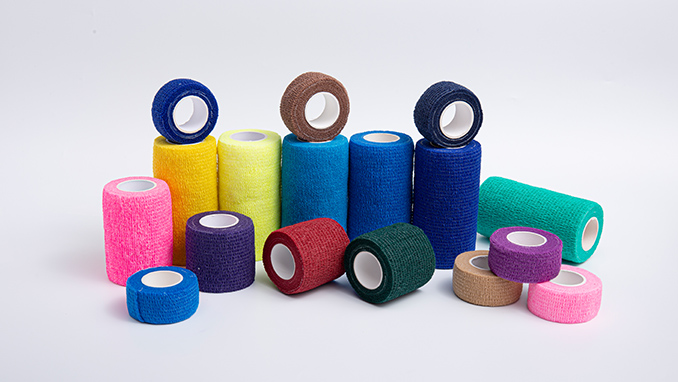
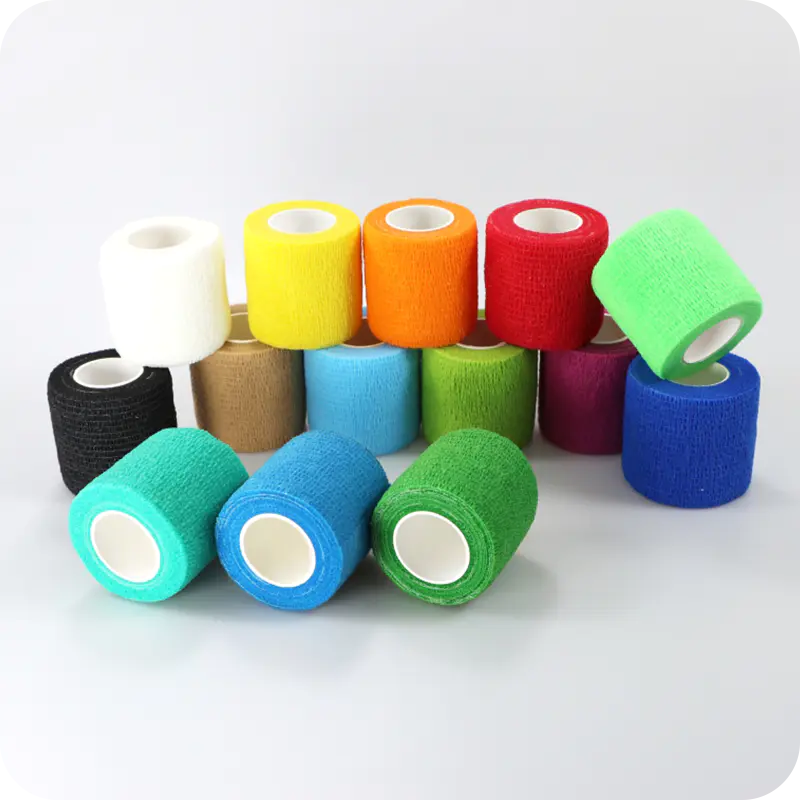
Self-adhesive elastic bandages are self-adhesive and elastic medical dressings primarily used to bandage and protect wounds, promoting wound healing. Their primary functions include securing and protecting wounds, preventing bacterial intrusion, and promoting wound healing. Self-adhesive elastic bandages are typically made of high-quality elastic materials and medical adhesives. They typically consist of a multi-layered structure, including a wound-contacting dressing layer, a middle elastic layer, and an outer protective layer.
Shanghai Qinghong Healthcare Products Co., Ltd. located in Jiading District, Shanghai, is a leading manufacturer and supplier specializing in high-quality elastic bandages and athletic tape. Jiangsu Qinghong Healthcare Products Co., Ltd., headquartered in Suqian City, Jiangsu Province, has been committed to providing high-quality self-adhesive bandages, kinesiology tape, and cotton athletic tape to customers worldwide since its establishment in 2018. Leveraging strong R&D capabilities, stringent quality control, and customer-centric service, we have become a trusted partner in the industry.
Empowering Athletes to Confidently Push Their Limits
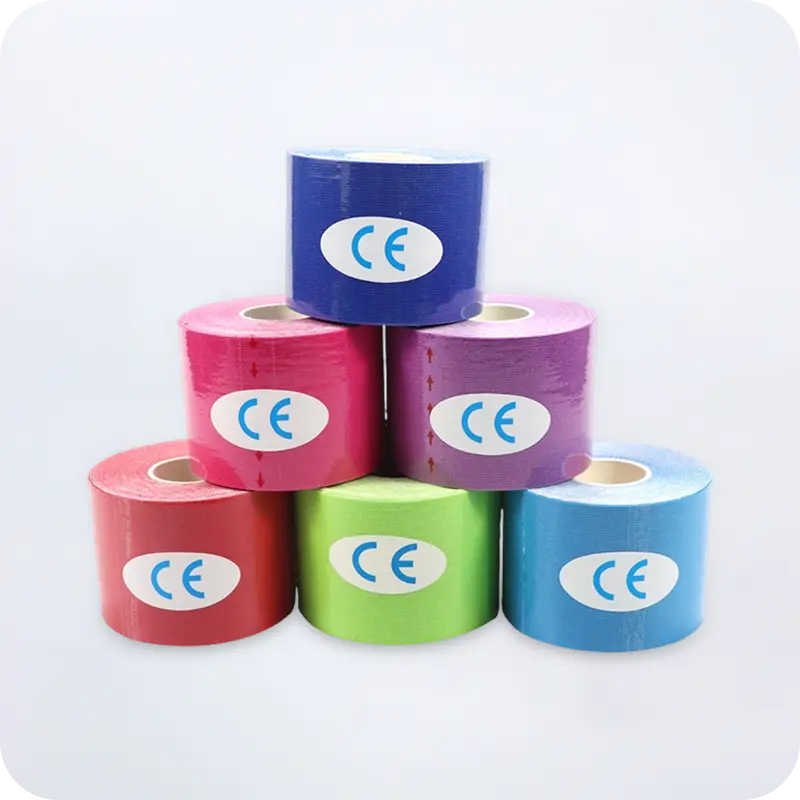
Our kinesiology tape delivers dynamic support, enabling unrestricted free movement while effectively enhancing muscle function and blood circulation. Our sports bandages, on the other hand, provide reliable fixation and stability for joints during high-intensity activities, effectively preventing sprains and strains. From sports enthusiasts to professional athletes, we offer trustworthy professional protection for both training and competitions.
Please feel free to contact us when you need us! Whether you want
to become our partner or need our professional guidance or support
in product selection and problem solving, our professional team is
always ready to help you.
What Are the Different Types of Medical Tape, and How Should You Choose One?
What Medical Tape Actually Does Before You Even Notice It
Most people only think about medical tape at the moment it fails: a bandage lifts at the corner, a dressing slides during a shower, or skin turns red after a few hours of wear. In practice, medical tape is a small piece of engineering. It has to stick firmly enough to hold a dressing in place through movement, sweat, and friction, yet release cleanly without tearing fragile skin. Understanding tape for medical use means understanding a balance between adhesion strength, breathability, flexibility, and skin compatibility.
Clinics, home care settings, and sports facilities each rely on different tape properties. A tape that performs well in a fast-paced emergency room may be the wrong choice for a child's sensitive skin or for a long-distance runner who needs the wrap to move with a joint for hours. This guide breaks down the major categories, explains what is medical tape used for in real situations, and offers a practical framework for choosing the right product.
Types of Medical Tape: A Category Breakdown
When people search for types of medical tape name or different kinds of medical tape, they are usually trying to match a product to a specific need: wound coverage, splint support, compression, or securing an IV line. The table below organizes the main categories by backing material, typical stretch, and where each one is most commonly applied.
Tape Category
Backing Material
Stretch Level
Common Use
Paper Tape
Non-woven paper fiber
Low
Securing light dressings, sensitive skin
Cloth or Silk Tape
Woven cotton fabric
Low to Medium
Splinting, high-tension anchoring
Plastic Tape
Polyethylene film
Low
Waterproof sealing, shower-resistant dressings
Zinc Oxide Tape
Cotton with zinc oxide coating
Very Low
Rigid strapping, joint immobilization
PBT Bandage
Polybutylene terephthalate fiber
High
Cohesive wrapping, self-adherent support
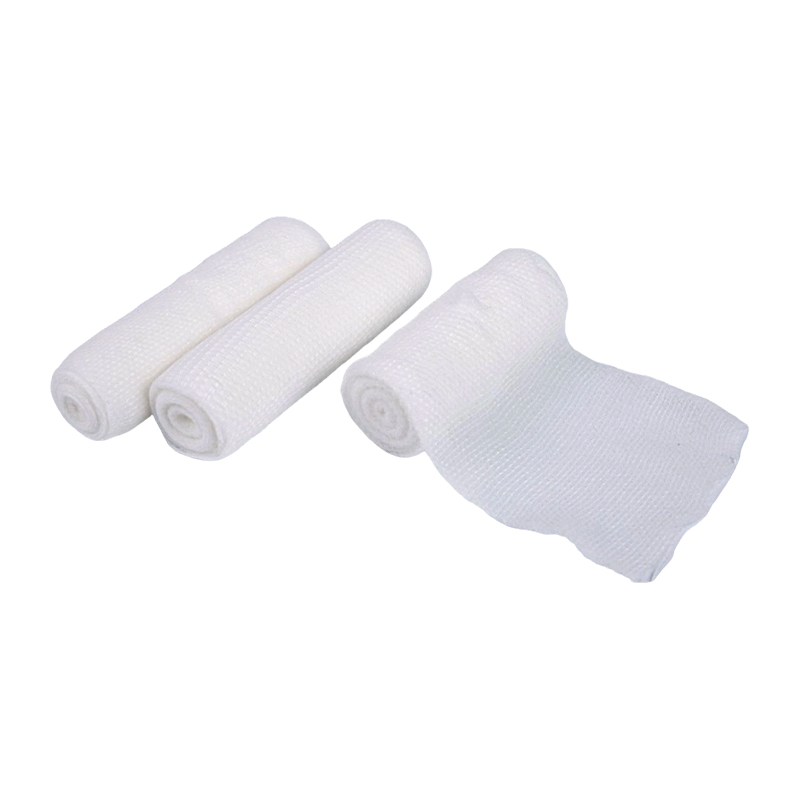
Light Elastic Bandage
Elasticated woven fabric
Medium to High
Compression, athletic taping, joint support
Each category answers a different version of the question types of surgical tape is meant to solve. Paper and cloth tapes focus on adhesion and anchoring, while elastic and cohesive wraps focus on movement and pressure distribution. Recognizing which problem you are solving is the first step toward picking the correct product.
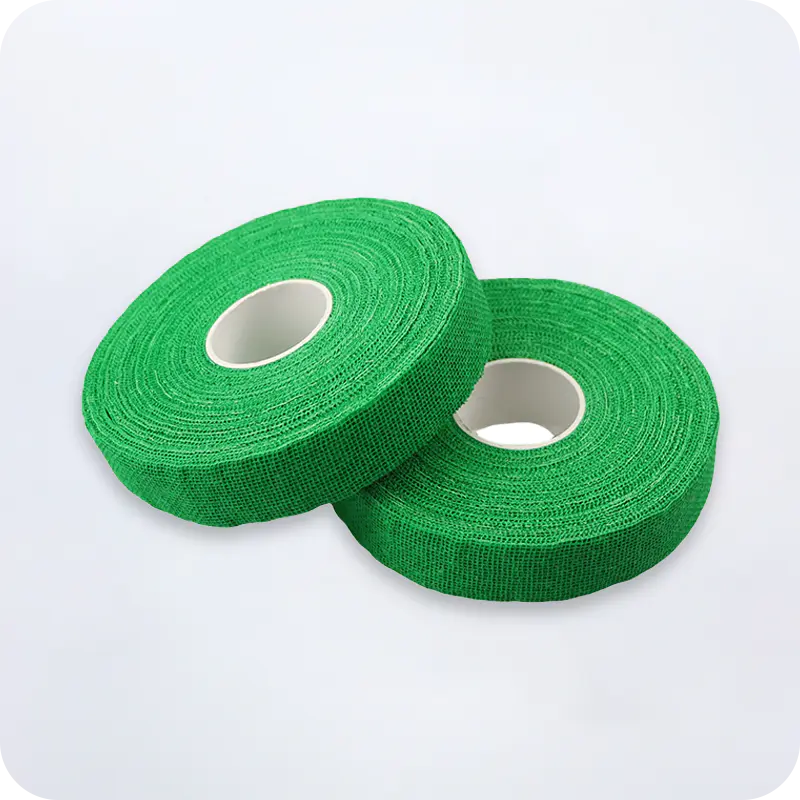
Paper Tape for Bandages: Breathable and Gentle by Design
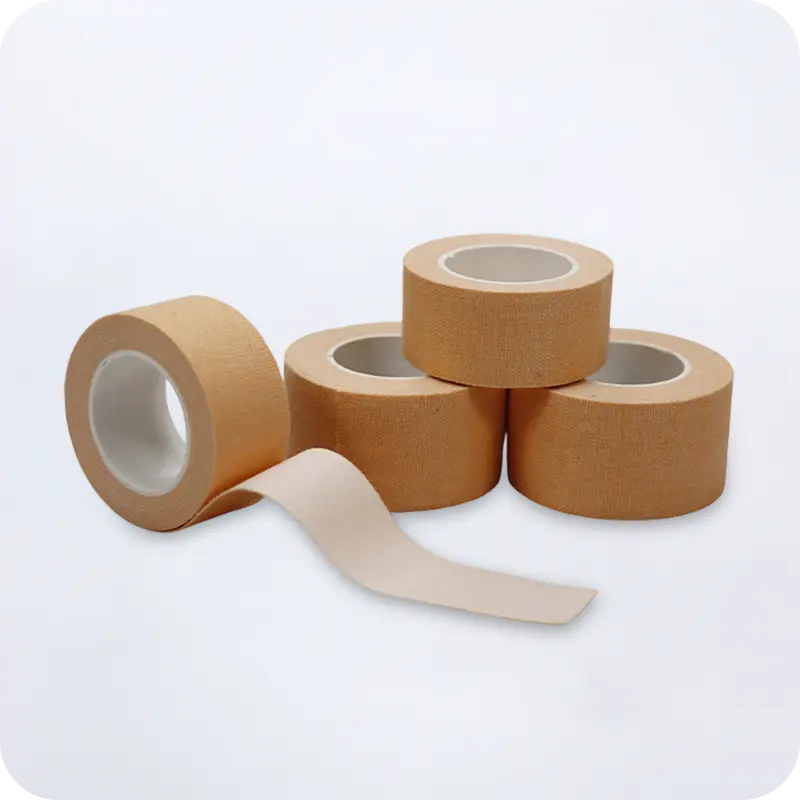
Medical paper tape is built from a non-woven, porous fiber that allows air and moisture vapor to pass through the adhesive layer. This is why it is frequently described as medical breathable tape. The porous structure reduces the risk of maceration, which is the softening and breakdown of skin that occurs when moisture becomes trapped underneath an occlusive material for extended periods.
Why breathability matters: Skin under an airtight tape can experience a measurable rise in local humidity within a few hours. Paper-based backings reduce this effect, which lowers irritation rates in longer-term dressing changes such as post-surgical care or pediatric wound management.
Paper tape medical products typically use a lower-tack acrylic or hydrogel adhesive, which is gentler on removal. This makes it a preferred option for elderly patients, infants, and anyone with thin or fragile skin, since aggressive adhesives can cause skin stripping when removed. The tradeoff is holding power: paper tape is not designed for high-tension applications like splint anchoring or heavy compression, where a stronger fabric-backed tape performs better.
Typical Situations Where Paper Tape Is the Right Fit
Securing gauze over a minor cut or post-injection site
Daily dressing changes on sensitive or aging skin
Short-term securement where quick, pain-free removal is a priority
Pediatric care where skin trauma from adhesive removal must be minimized
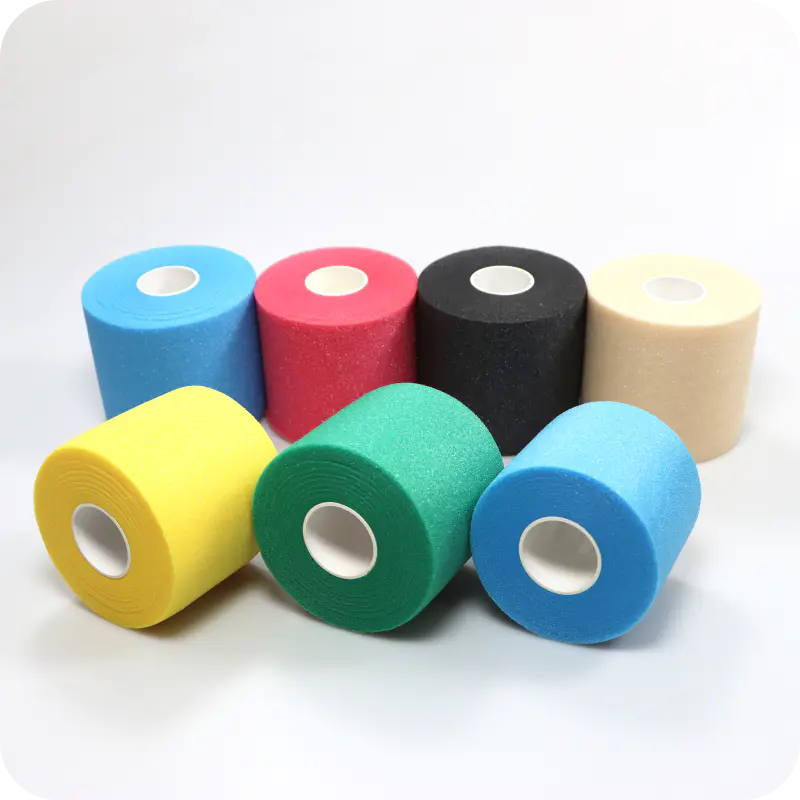
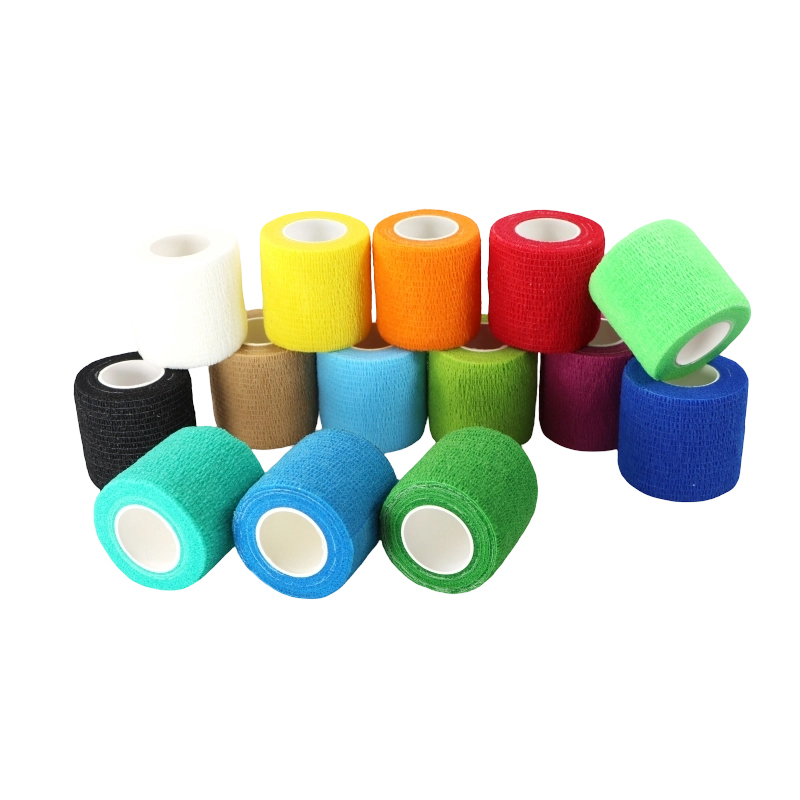
PBT Bandage: Engineered Fiber for Cohesive, Self-Adherent Wrapping
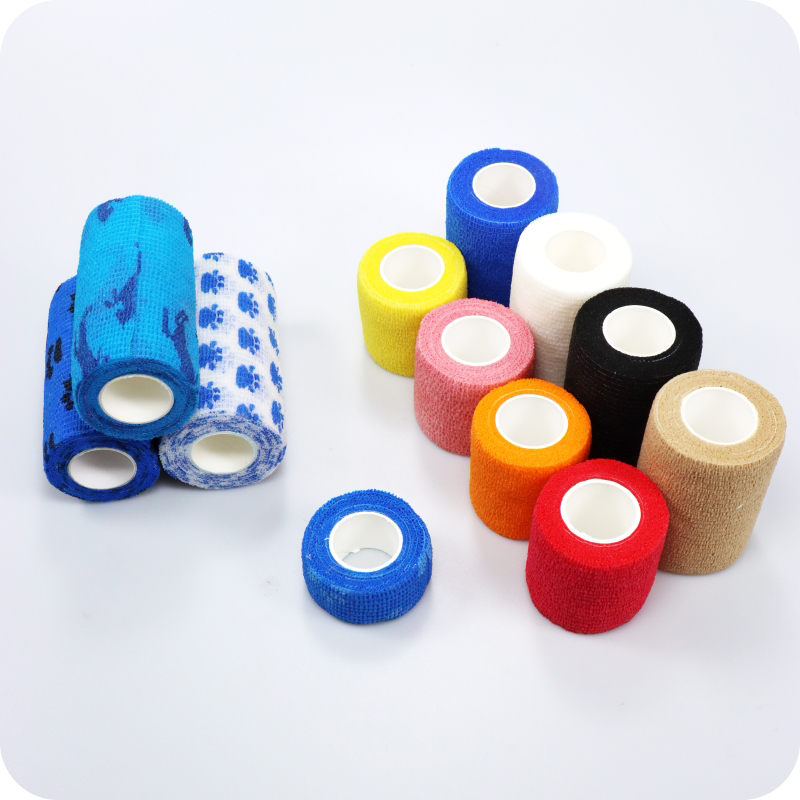
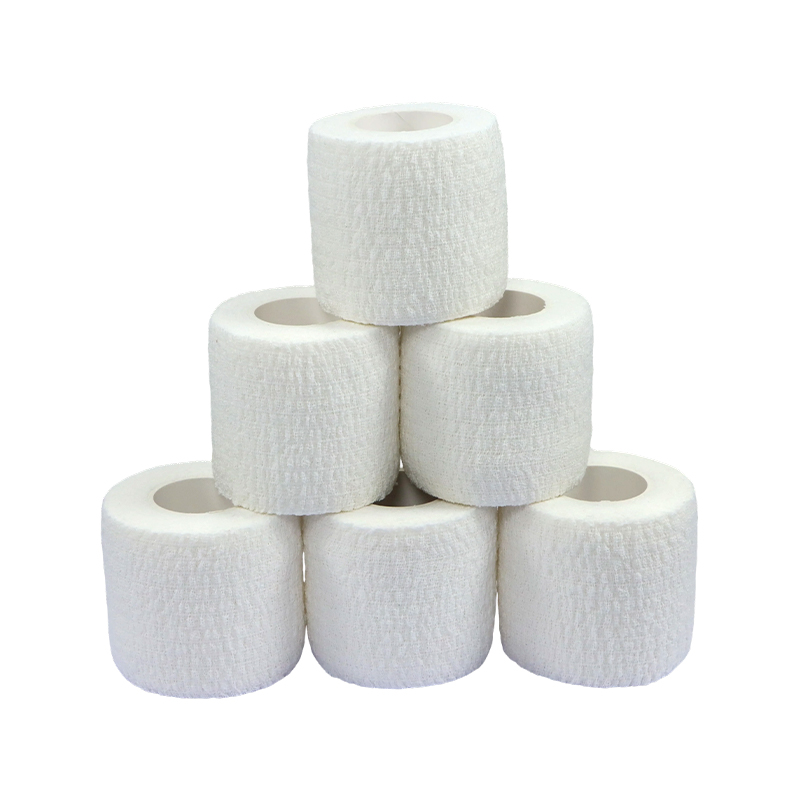
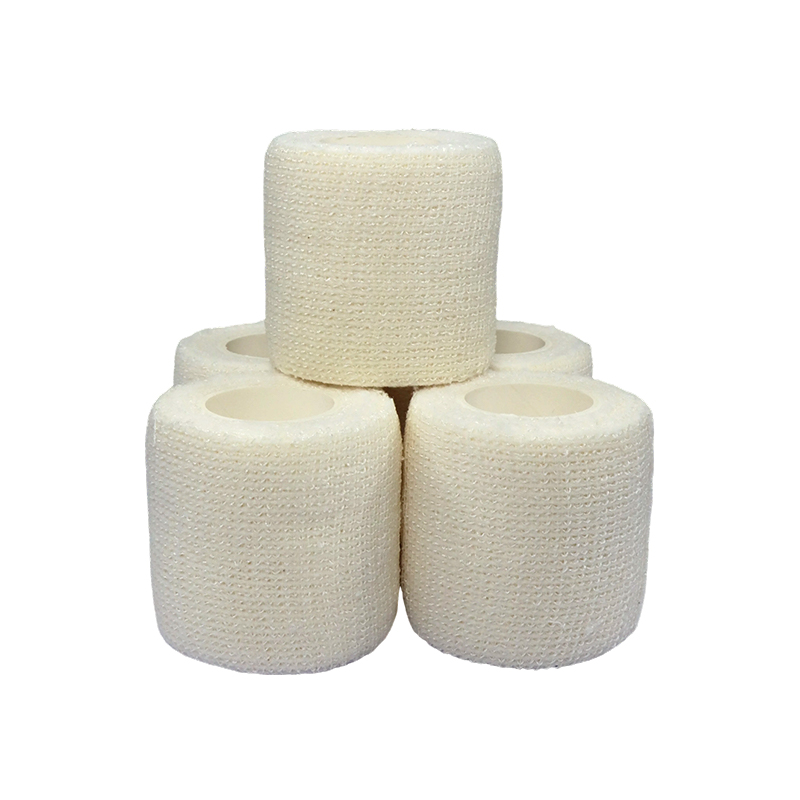
A PBT bandage is made from polybutylene terephthalate fiber, a synthetic material valued for its durability, elasticity recovery, and resistance to fraying during repeated stretching. Unlike traditional adhesive tape, most PBT wraps are cohesive, meaning they stick to themselves rather than directly to the skin. This design removes the adhesive-contact irritation risk entirely, which is one reason it is often chosen for a cohesive medical wrap where the tape needs to stay in place over hours of activity without direct skin adhesive.
Because the fiber has a strong memory return, the wrap tends to maintain consistent tension after it is applied, rather than loosening progressively the way some cotton-based wraps can. This property makes it useful in situations where consistent, even pressure matters, such as securing a dressing over a joint that continues to move.
Property
Behavior
Skin Contact
Wraps to itself, not directly adhesive to skin
Tension Recovery
Returns to original shape after stretching
Water Exposure
Maintains grip in damp conditions
Reusability
Can typically be removed and reapplied within the same use period
This combination of properties is why the PBT bandage category has become a common answer when clinicians and first aid trainers are asked for a modern types of medical tape name that avoids adhesive-related skin problems while still holding securely through motion.
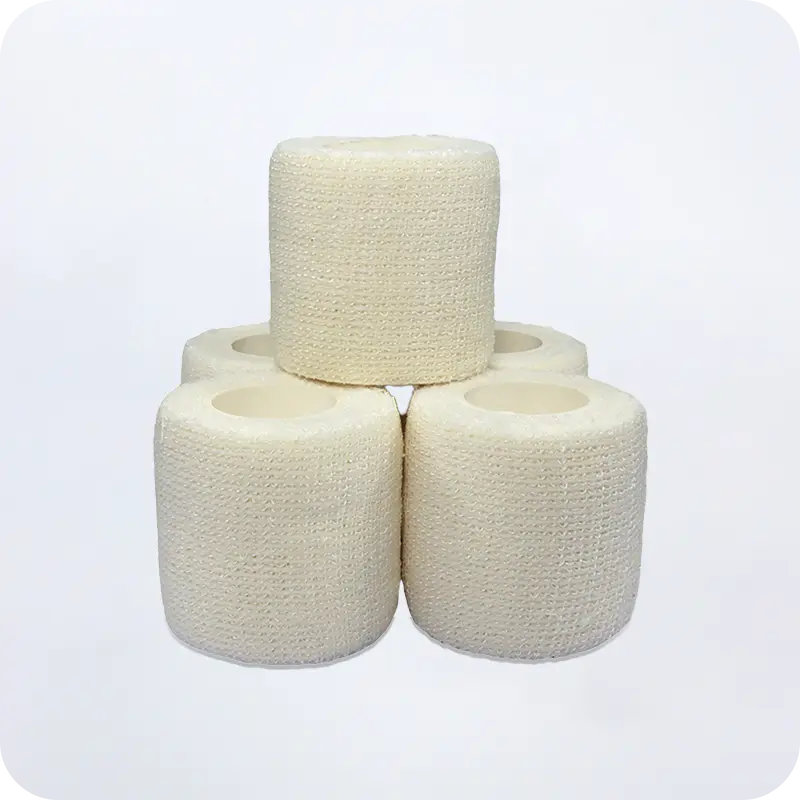
Light Elastic Bandage: Compression and Comfort in Motion
A light elastic bandage uses a woven fabric structure with built-in elasticity, allowing it to stretch and contract along with the body during movement. This is different from a rigid strapping tape, which is intentionally low-stretch to restrict motion. Elastic bandages are chosen when the goal is graduated compression, mild joint support, or securing a dressing over an area that bends frequently, such as a wrist, knee, or elbow.
The elasticity allows the wrap to apply consistent, even pressure across a wider surface area compared to a rigid tape, which tends to concentrate pressure at the edges. This even distribution is one reason light elastic wraps are common after minor sprains, for reducing localized swelling, and in situations where a limb needs support without fully immobilizing the joint.
Comparing Elastic Wrap to Rigid Strapping Tape
Elastic wrap: stretches with movement, applies graduated compression, better for swelling reduction and joint mobility support
Rigid strapping tape: minimal stretch, restricts range of motion, better for stabilizing a joint after a more significant injury
Selecting between the two often comes down to a simple question: does the injury need to move a little, or not move at all. When some motion is safe and even beneficial for circulation, a lighter elastic option for medical bandage tape name selection tends to be the better fit.
How to Choose the Right Surgical Tape by Skin Type and Wound Care Need
What is surgical tape, functionally, is any adhesive or wrap-based material used to secure a dressing, stabilize a body part, or close a minor wound edge. Choosing correctly involves matching four variables: skin sensitivity, moisture exposure, required hold strength, and duration of wear. The flow below outlines a simplified decision path.
This kind of layered decision process is the practical version of a first aid tape selection guide. Rather than picking a tape based on habit, evaluating skin type, moisture, and motion needs together produces a more reliable match, particularly for recurring dressing changes where repeated irritation can become a real problem.
Application Best Practices for Reliable Adhesion
Even the correct tape choice underperforms if applied incorrectly. The following practices reduce lifting, wrinkling, and premature failure across most kinds of medical tape.
Clean and dry the skin thoroughly before application, since oils and moisture significantly reduce adhesive contact.
Avoid stretching adhesive tape tightly across skin, which can cause tension blisters as the area moves.
Round the corners of rectangular tape strips to reduce edge lifting caused by friction against clothing.
For elastic and cohesive wraps, apply with even, moderate tension rather than pulling to maximum stretch.
Remove tape slowly and parallel to the skin surface, rather than pulling straight upward, to minimize skin trauma.
Clean SkinEven TensionRounded EdgesSlow Removal
Hypoallergenic Tape vs Zinc Oxide Tape: Choosing for Skin Reaction Risk
One of the more common comparisons patients and caregivers search for is hypoallergenic medical tape against traditional zinc oxide options. The two serve different priorities rather than being direct substitutes for each other.
Factor
Hypoallergenic Tape
Zinc Oxide Tape
Primary Goal
Minimize skin reaction
Maximize rigid holding strength
Adhesive Type
Low-irritant acrylic or silicone-based
Standard rubber-based adhesive
Best For
Sensitive skin, frequent tape changes
Athletic strapping, joint stabilization
Breathability
Generally higher
Lower, more occlusive
When the priority is repeated, gentle use over days or weeks, a hypoallergenic option is usually the better choice. When the priority is short-term, high-strength stabilization, such as strapping an ankle for a single athletic event, zinc oxide tape vs paper tape comparisons typically favor the zinc oxide option for its rigidity, even though it is less breathable and more likely to cause irritation over extended wear.
Frequently Asked Questions About Medical Tape Types
Q1: What is medical tape, in simple terms
Medical tape is an adhesive or self-adherent material used to secure dressings, stabilize joints, or hold medical devices such as IV lines in place. It comes in several backing materials, each suited to different skin sensitivities and holding requirements.
Q2: What is paper tape medical grade actually made from
Medical-grade paper tape is made from a non-woven paper fiber that is porous enough to let air and moisture pass through, which is why it is commonly chosen for sensitive skin and longer-term dressing changes.
Q3: How is a PBT bandage different from standard adhesive tape
A PBT bandage is typically cohesive, meaning it sticks to itself rather than to the skin directly. This avoids adhesive irritation while still holding firmly through movement, which is why it is often used for wrapping rather than direct skin securement.
Q4: When should a light elastic bandage be used instead of a rigid tape
A light elastic bandage is the better option when some joint movement should still be possible, such as mild sprain support, since it stretches with the body and applies graduated compression rather than fully restricting motion.
Q5: Is medical plastic tape waterproof
Medical plastic tape uses a polyethylene film backing that resists water penetration, making it a common choice for dressings that need to stay intact during showering or exposure to moisture.
Q6: How do I know if I need a hypoallergenic tape
If skin shows redness, itching, or irritation after previous tape use, or if the tape will be changed frequently over several days, a hypoallergenic option is generally the safer choice compared to standard adhesive tapes.






 English
  русский
  Français
  Español
  عربى
عربى 

 ENG
ENG