Three rolls labelled "lightweight elastic bandage" can arrive from three suppliers at 32 GSM, 48 GSM, and 74 GSM, stretch to different lengths under the same load, and leave completely different residue on the skin. Buyers usually discover that gap after the carton has cleared customs. When the application is joint support, light compression, or post-treatment fixation, the roll that looks soft in a catalogue photo is not always the roll that performs on a patient's ankle.
Here is the short answer: choose lightweight elastic bandages by defining the job first, then verify grammage, stretch recovery, cohesion or adhesive level, edge finish, and allergen status against that job. Price per roll only becomes meaningful once those five points match your application. The sections below explain how to run that check, with the numbers and tolerance ranges that matter in real orders.
What "Lightweight" Means in Bandage Specifications
Lightweight is often a marketing word, not a measurement. In production terms, a lightweight elastic bandage is a roll with lower fabric grammage, higher stretch per meter, and lower compression than a standard elastic wrap. Most rolls sold for light support sit between 30 and 80 GSM, with a stretch ratio around 1:1.5 to 1:2.2 depending on material and weave.
Material choice drives the rest of the behaviour. Cotton cohesive wraps feel softer and hold wrapped ends well. Nonwoven cohesive wraps are thinner, lighter, and usually cheaper per roll. PBT bandages bring high stretch with good breathability and no adhesive. Latex-free constructions replace natural rubber with synthetic elastomers, which changes both hand feel and shelf life.
Table 1: Typical specification ranges for lightweight elastic bandage materials. Values vary by supplier and should be confirmed with a pre-production sample.
| Bandage type |
Typical grammage |
Stretch ratio |
Adhesion |
Best-fit use |
| Cotton cohesive light elastic |
45-70 GSM |
1:1.6-1:1.9 |
Self-adhesive |
Sports support, joint wrapping, daily care |
| Nonwoven cohesive light elastic |
30-55 GSM |
1:1.7-1:2.1 |
Self-adhesive |
Light retention, sensitive skin, high-volume use |
| PBT elastic bandage |
35-60 GSM |
1:1.8-1:2.2 |
Non-adhesive |
Clinical fixation, rehabilitation, breathable support |
| Latex-free light stretch wrap |
40-65 GSM |
1:1.5-1:1.8 |
Low or none |
Latex-sensitive patients, paediatric and long-wear use |
A practical reference point: if a supplier cannot state grammage and stretch ratio within a plus or minus five percent tolerance, treat the quotation as a sample request rather than a purchase order.
Match the Bandage Type to the Application
Type selection follows the job. Three families cover most lightweight elastic bandage needs, and mixing them up is the most common source of returns.
Cohesive Light Elastic Bandages
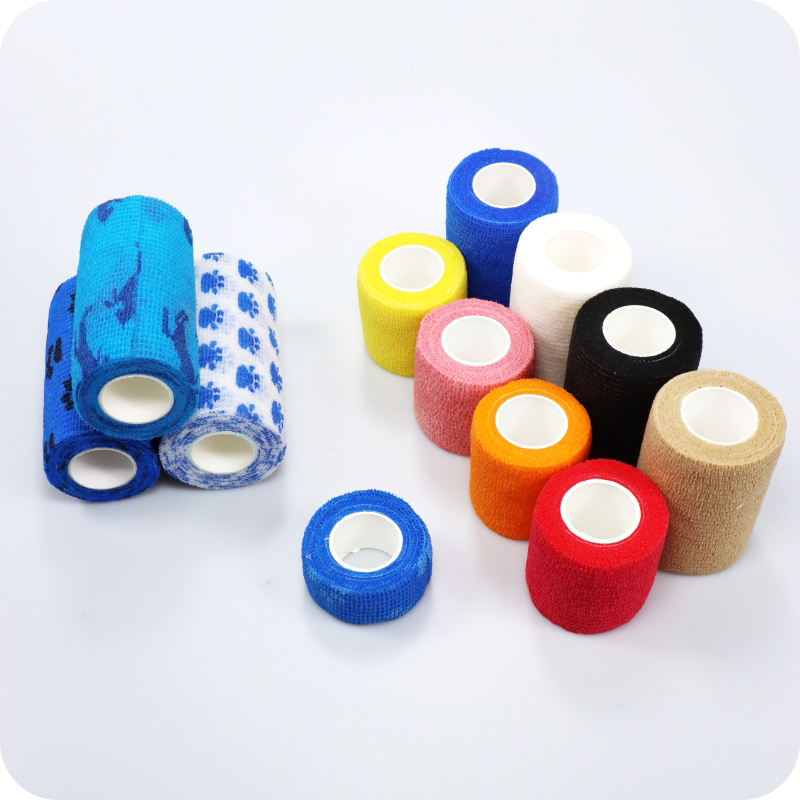
Cohesive rolls stick to themselves rather than to skin or hair, so they need no clips and stay in place during movement. Cohesion level matters: a strong cohesive wrap can be reused several times, while a light cohesive wrap is designed for single-use retention. For colour-matched or skin-tone applications, check that the dyed layer does not bleed when wet.
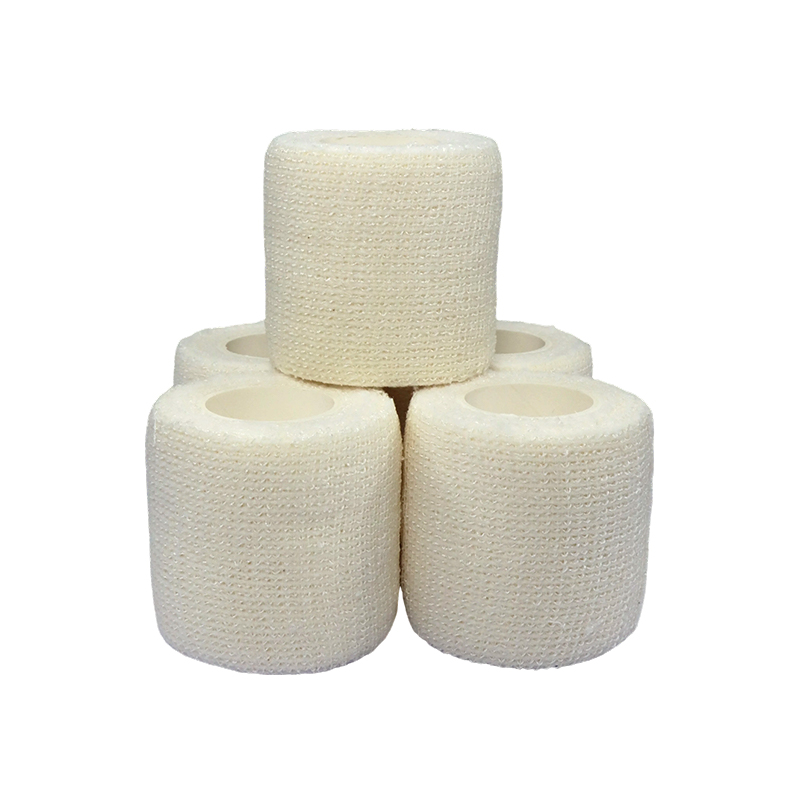
 Skin-Colored Light Elastic Bandage Wrap for FixationDiscreet skin-tone elastic wrap with hypoallergenic adhesive, breathable cotton-spandex support, and hand-tearable convenience for rehabilitation, sports, or dressing retention.View Product →
PBT Light Elastic Bandages
PBT bandages are non-adhesive, breathable, and stretch in both directions. They suit clinical fixation where the user wants to adjust tension without adhesive contact. Lightweight PBT versions are common in rehabilitation, outpatient care, and sports injury support, where a thin profile under clothing matters.
 Lightweight Soft Stretch PBT BandageNon-adhesive 100% polyester PBT wrap offers breathable, low-bulk support for pediatric, elderly, wound, rehabilitation, and sports-injury care.View Product →
Non-Adhesive and Waterproof Compression Wraps
When compression needs to be adjusted over hours, a non-adhesive wrap lets the user re-tension the roll without replacing it. Waterproof cohesive versions add resistance to sweat and brief water contact, which is useful in sports and shower-safe care. For a deeper look at clinical and sports contexts, our article on light elastic bandage applications covers the practical differences in more detail.
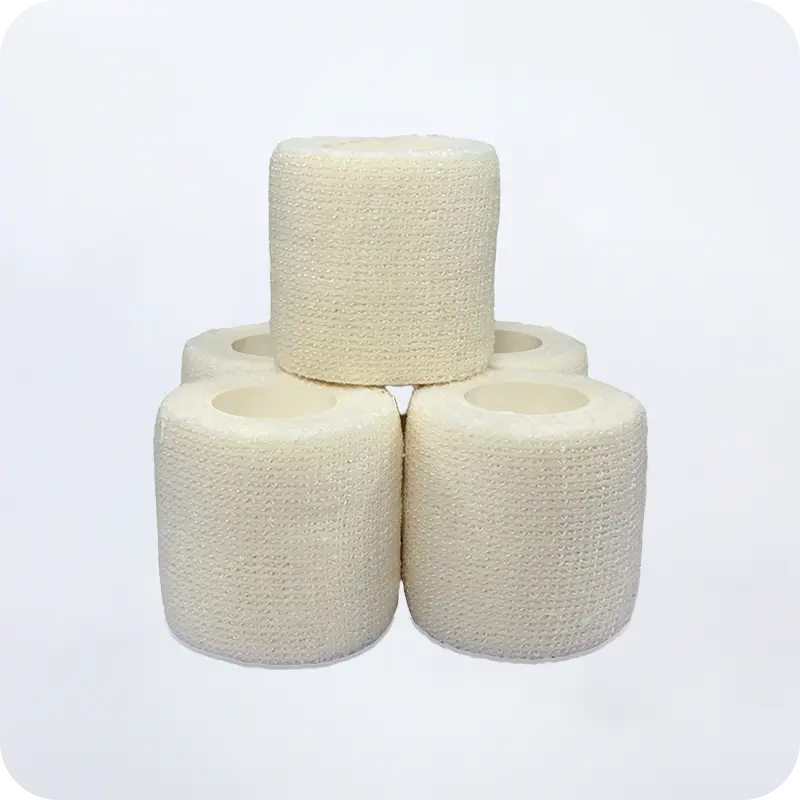
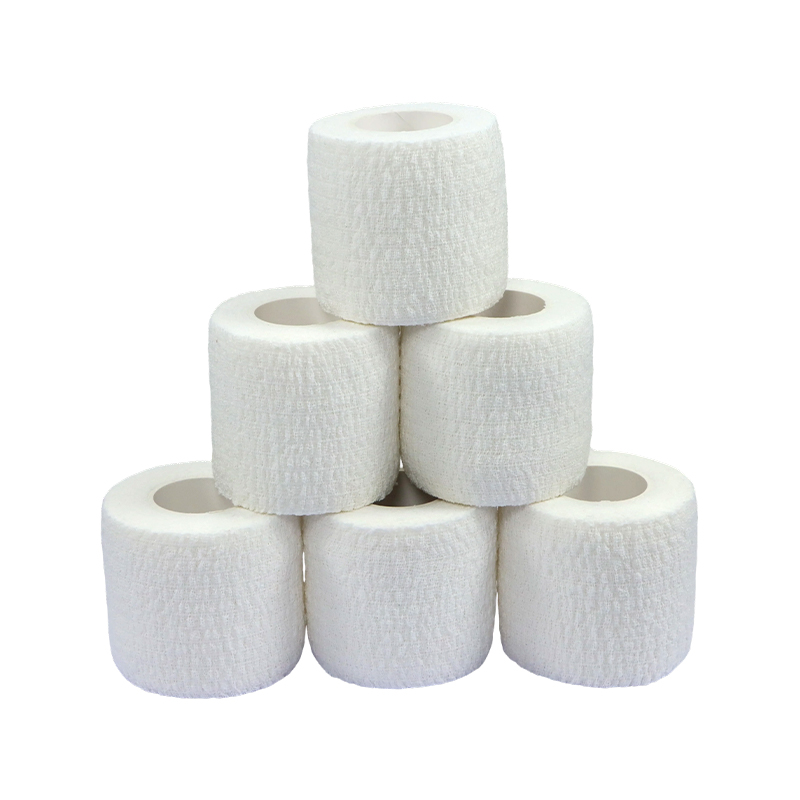
 White Waterproof Cohesive Stretch Bandage WrapWaterproof cohesive wrap with breathable cotton-spandex stretch, secure hypoallergenic adhesion, and single-use protection for wet wound-care settings.View Product →
Five Specifications to Verify on Every Sample
Sample evaluation should produce numbers, not impressions. These five checks catch most quality problems before they reach a production line.
- Grammage and thickness. Ask for GSM and caliper in millimetres. A 30 GSM nonwoven feels very different from a 70 GSM cotton roll, even when both are marketed as lightweight.
- Stretch and recovery. Measure how far the roll extends under a fixed load, then how much it returns after ten cycles. Recovery below 90 percent is a warning sign: the wrap will loosen during wear.
- Adhesion or cohesion stability. Test after 24 hours on skin or on the roll itself. Cohesive wraps should hold without sliding, yet release cleanly without tearing the edge.
- Edge finish. A lock-stitched or reinforced edge resists fraying. Frayed fibres create lint and reduce the usable length of the roll.
- Latex and allergen status. Confirm natural rubber latex, latex-free, or no-protein construction, especially for paediatric, post-operative, and long-wear applications.
Rule of thumb: a lightweight bandage that loses more than 10 percent of its original tension within 24 hours will not survive a normal wear cycle, no matter how comfortable it feels on the first application.
Sizing and Compression by Body Area
Width and stretch should follow the limb, not the packing photo. Over-tension near joints causes pressure marks; too little tension makes the wrap slide.
Table 2: Common width and stretch guidance for lightweight elastic bandages by body area.
| Body area |
Common width |
Recommended stretch |
Practical note |
| Fingers |
2.5-5 cm |
Low stretch 1:1.2-1:1.5 |
Use a finger protection bandage for tight, small areas |
| Wrist |
5-7.5 cm |
1:1.5-1:1.8 |
Avoid over-tension near the thumb base |
| Ankle |
7.5-10 cm |
1:1.6-1:2.0 |
Figure-eight wrapping reduces slippage |
| Knee |
10-15 cm |
1:1.5-1:1.8 |
Check the back of the knee for pressure points |
| Elbow |
7.5-10 cm |
1:1.5-1:1.8 |
Keep the joint slightly flexed during wrapping |
Common Procurement Mistakes That Cause Returns
- Ordering by colour or product photo instead of GSM and stretch ratio.
- Assuming the quoted length is stretched length when most suppliers quote relaxed length.
- Storing cohesive rolls in humid warehouses, which softens the cohesion layer and shortens shelf life.
- Running latex and latex-free lines on shared equipment without documented cleaning verification.
- Skipping the 24-hour retention test on a real user before committing to a bulk run.
FAQ: Lightweight Elastic Bandage Sourcing Questions
Q1: What grammage counts as lightweight for an elastic bandage?
Most lightweight rolls fall between 30 and 70 GSM. Anything below 30 GSM is usually a retention or under-wrap product rather than a support bandage.
Q2: Can a lightweight bandage provide enough compression for a sprained ankle?
For mild swelling and light support, yes, if the stretch ratio is at least 1:1.6 and the wrap is applied with even tension. For moderate or severe sprains, a stronger compression bandage is the safer choice.
Q3: How do I test cohesion before a bulk order?
Wrap a sample around a cylinder or a volunteer's wrist, leave it for 24 hours, and check sliding, edge lifting, and residue. Repeat the test three times with different production lots.
Q4: What is the shelf life of a cohesive lightweight bandage?
Typically 18 to 24 months in original packaging, stored below 25 degrees Celsius and away from direct sunlight. Humidity is the main risk for cohesive products.
From Sample to a Repeatable Bulk Order
Define the application, fix the five specifications in writing, and test three production lots before committing to a full run. That sequence keeps lightweight elastic bandages light in weight and heavy in performance, and it gives your quality team a baseline to audit against on every reorder.
Send us your application notes, target GSM, width, colour, and latex requirements, and we will return a matched sample set with the technical data sheet. Our team supports sports protection programmes, medical care, rehabilitation, and daily healthcare supply with documentation for each order, so you can compare specifications rather than descriptions.






 English
 русский
 Français
 Español
 عربى


 ENG