A kitchen cut draws blood, and almost instinctively you reach for a bandage. You wrap it around the finger, press the adhesive edges down, and assume the job is done. But a bandage is not just a piece of fabric with glue. It is a small engineered system that creates a clean, moist, and protected space for the skin to repair itself.
Here is the direct answer: bandages work through three main actions: forming a physical barrier, maintaining a moist healing environment, and applying controlled compression or support. The adhesive keeps the barrier in place, while the material of the pad and the bandage itself manage moisture, airflow, and pressure.
In this guide, we will look at the mechanisms behind different bandage types, how material choices change their performance, and how to choose the right product for clinical, sports, and everyday care.
The Core Mechanism: Protection and a Controlled Healing Environment
The primary job of a bandage is to shield the wound from external contamination. Bacteria, dirt, and debris can delay healing or cause infection. A bandage pad sits directly over the wound and absorbs exudate, while the adhesive layer seals the edges to the surrounding skin. This creates a physical barrier that reduces the risk of contamination without completely sealing the wound.
Equally important is moisture management. Medical research has shown that wounds heal faster when they stay slightly moist, not too wet and not too dry. A dry wound forms a hard scab, and the healing process slows because cells must work harder to migrate across the dry surface. A wet wound, on the other hand, can become macerated. The best bandages strike a balance: they absorb excess fluid, allow some airflow, and maintain a humid environment at the wound interface.
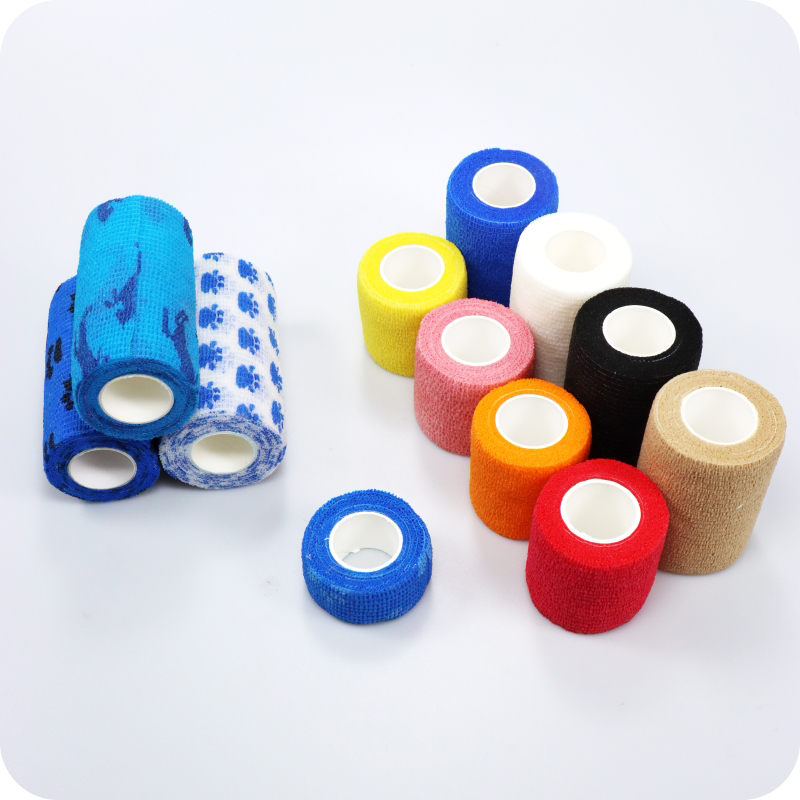
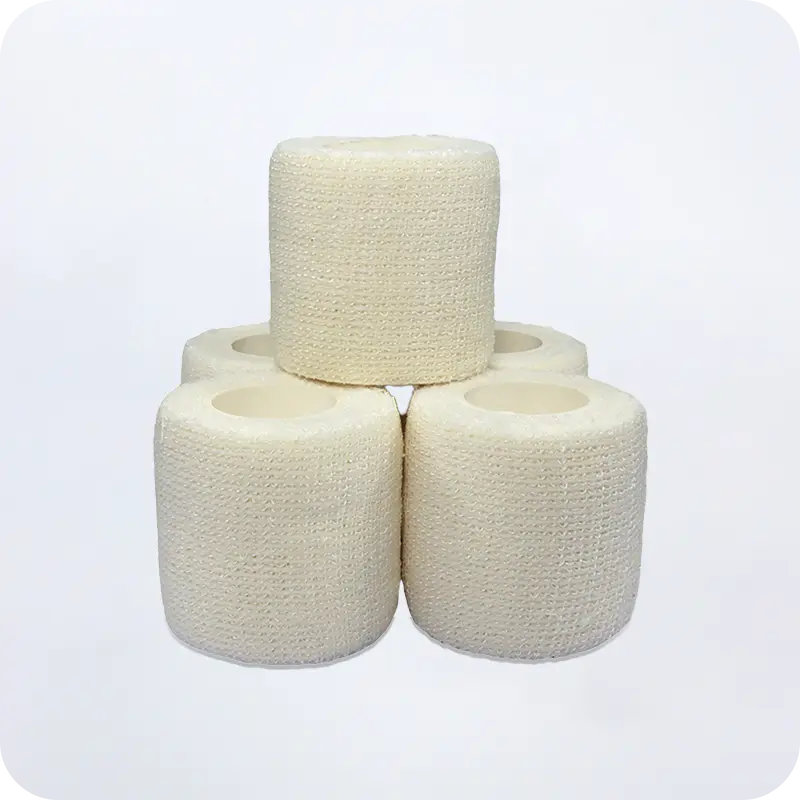
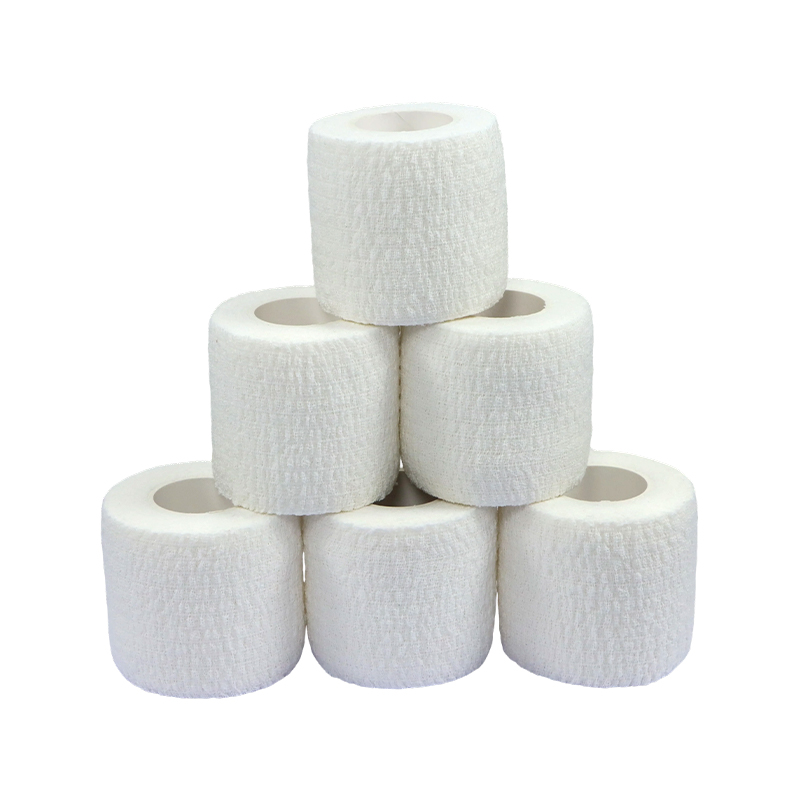
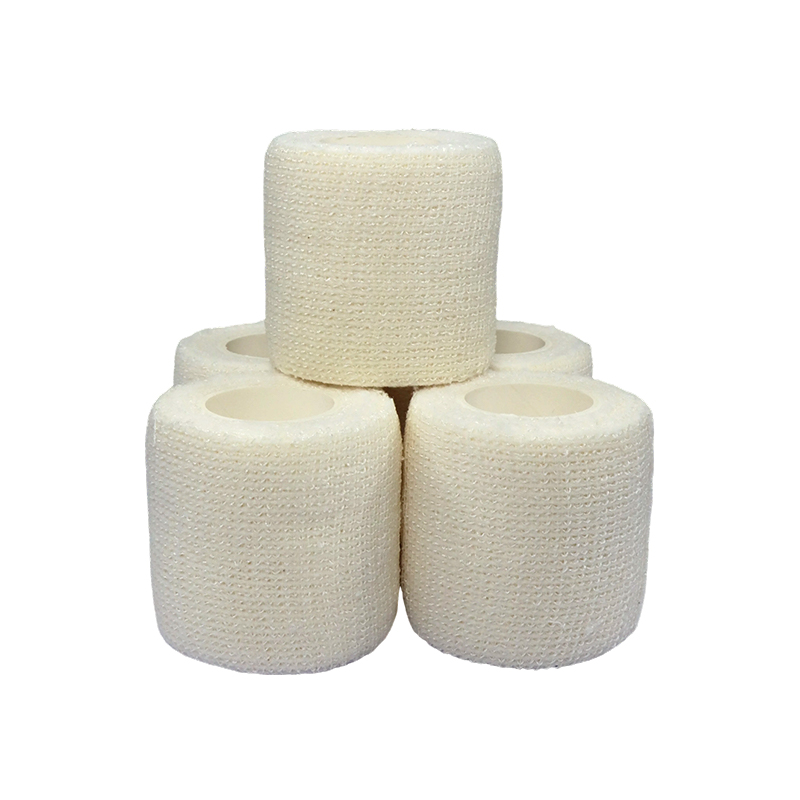
Self-adhesive elastic bandages are designed with this balance in mind. The pad layer contacts the wound, the elastic layer stretches with the body, and the outer layer protects the pad. One example that embodies this multilayer approach is the physiotherapy skin-color self-adherent elastic wrap rolls, which provide light compression while maintaining breathability. For a broader look at how these products are used in clinical settings, our medical care solutions page explains the application principles.
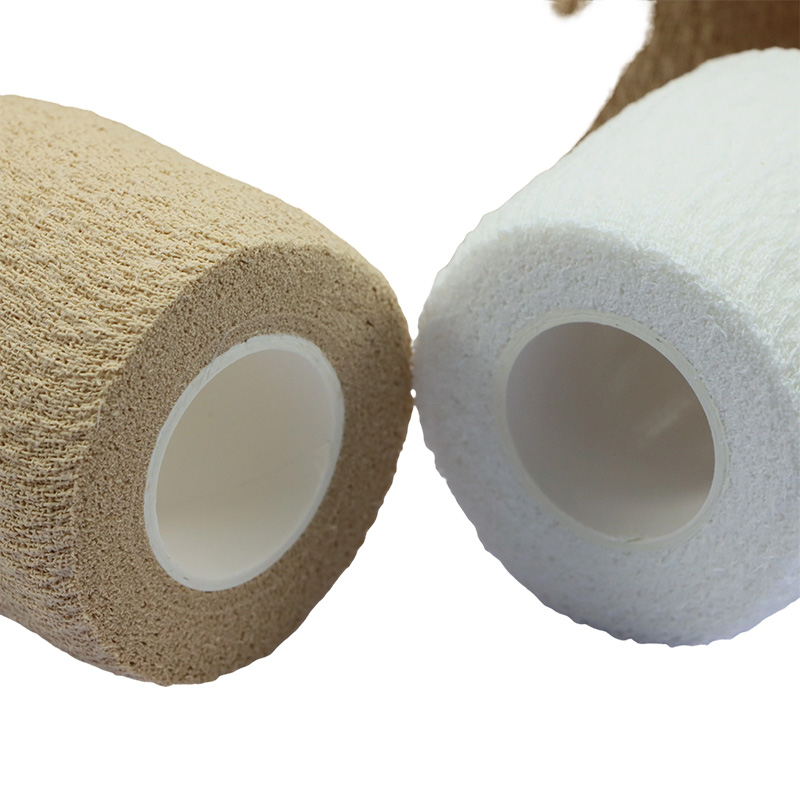 Skin-Tone Self-Adherent Cotton Elastic Bandage RollThis self-adhesive cotton bandage blends with skin tone, offering breathable support and stable compression for daily care and rehabilitation without clips or pins.View Product →
How Elasticity and Compression Affect Blood Flow and Swelling
Compression is the second major mechanism. Elastic bandages can exert pressure on the underlying tissues. This pressure helps close small blood vessels, reduce local swelling, and stabilize joints or muscles during movement. In sports first aid, compression is an essential part of injury management because it limits the accumulation of fluid in the injured area.
For practical purposes, the amount of compression matters. A loose bandage may slip, while an excessively tight one can restrict circulation. Well-designed elastic bandages provide a predictable range of tension, often measured in millimeters of mercury (mmHg) for compression garments. For ankle sprains or muscle strains, a moderate compression level of around 20 to 30 mmHg is generally comfortable and effective, but the exact value depends on the product, the body area, and the intended use.
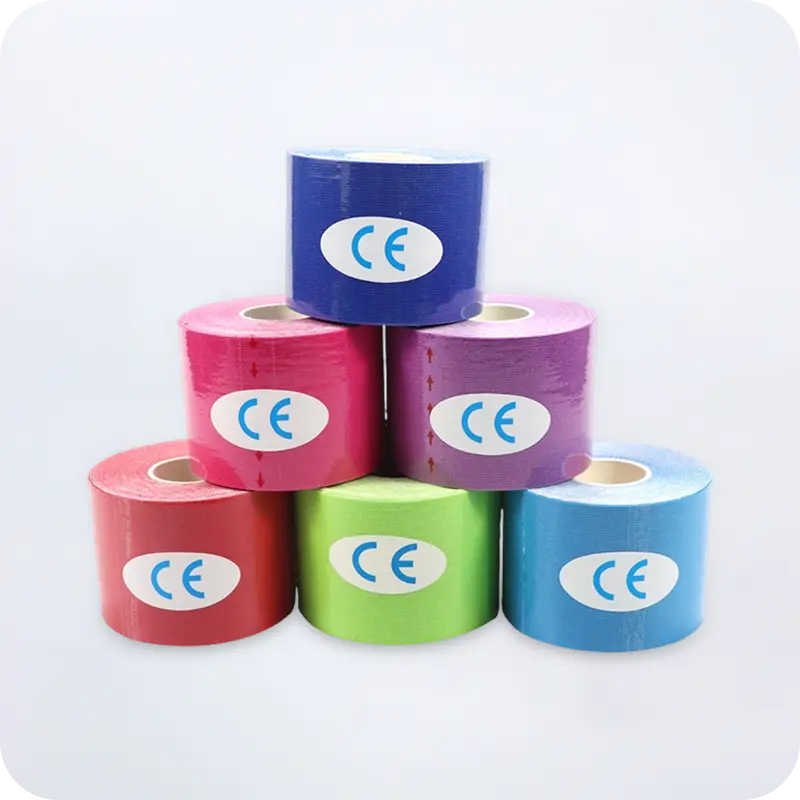
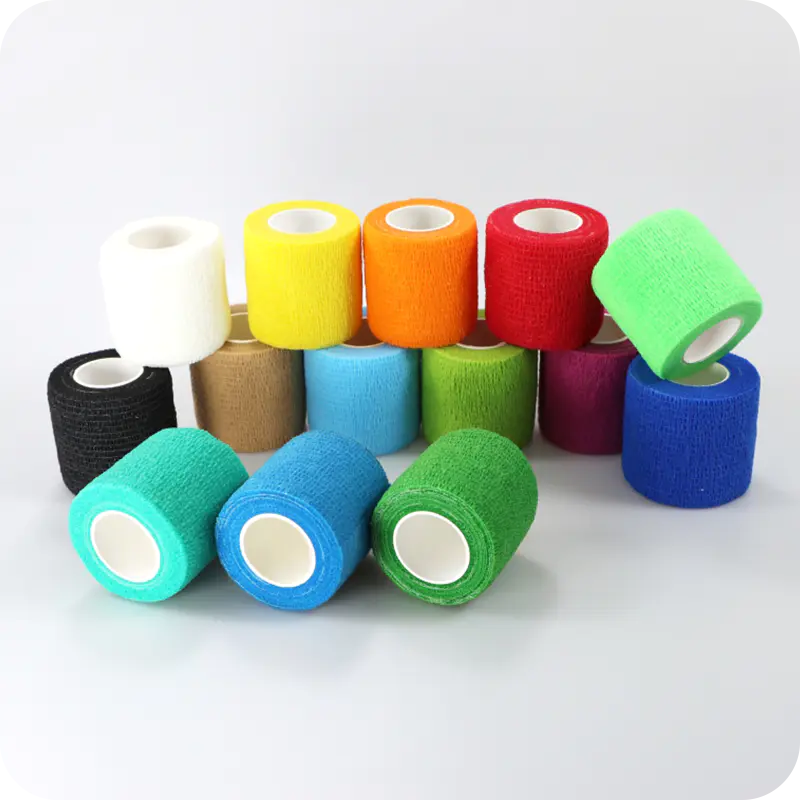
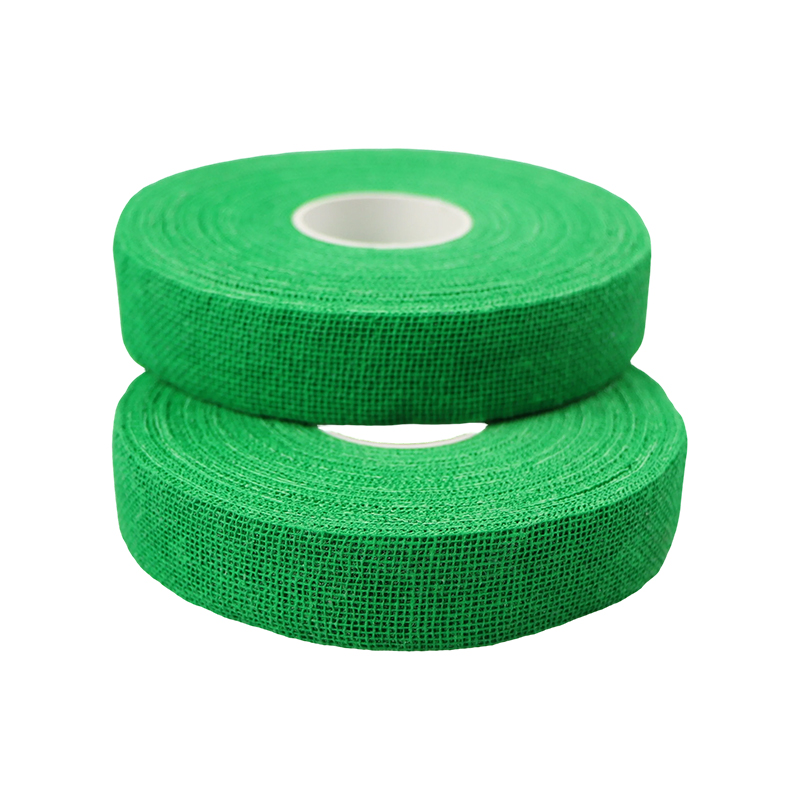
In this category, a pure cotton self-adherent sports bandage tape can be a useful tool because it offers the stretch and grip needed for joint support without requiring additional clips or pins. For more details on how elastic bandages fit into exercise and rehabilitation, visit our sports protection solutions page.
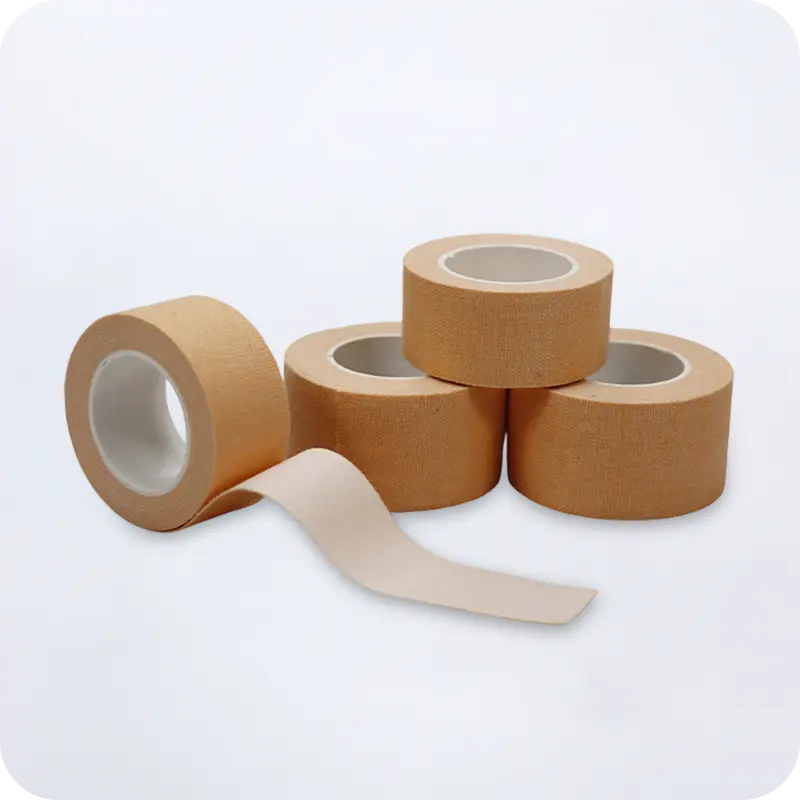
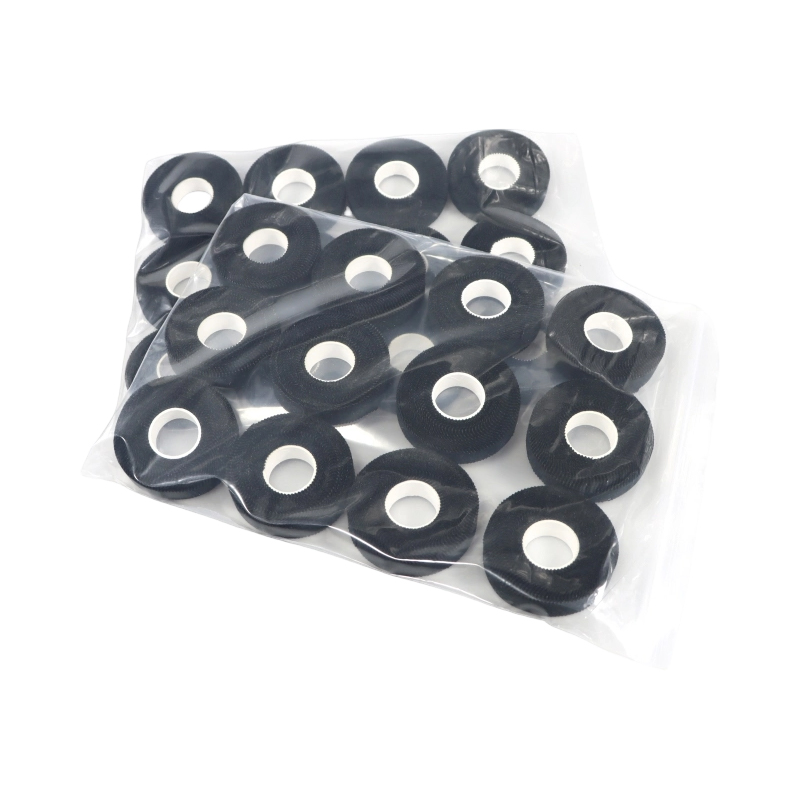 Rigid Cotton Sports Bandage for High-Impact Joint SupportWoven from high-density cotton yarn, this rigid bandage provides firm immobilization and durable adhesion, ideal for intense athletic activities and injury prevention.View Product →
Materials and Design Choices That Determine Performance
Bandage performance is largely determined by the material composition. Each material offers different levels of stretch, absorption, breathability, and adhesion. Below is a comparison of common bandage materials that manufacturers use in modern wound care and sports protection.
Common bandage materials and their typical characteristics
| Material |
Key Properties |
Typical Applications |
| Cotton |
Soft, breathable, high absorption |
General wound dressing, self-adhesive elastic wraps |
| Nonwoven |
Lightweight, conformable, low-lint |
Sensitive skin wounds, low-pressure dressing |
| PBT (polyester/polyamide) |
High stretch, low cost, conforming |
Medical fixation, sports injury wrapping |
| PU foam |
Softness, cushioning, moisture control |
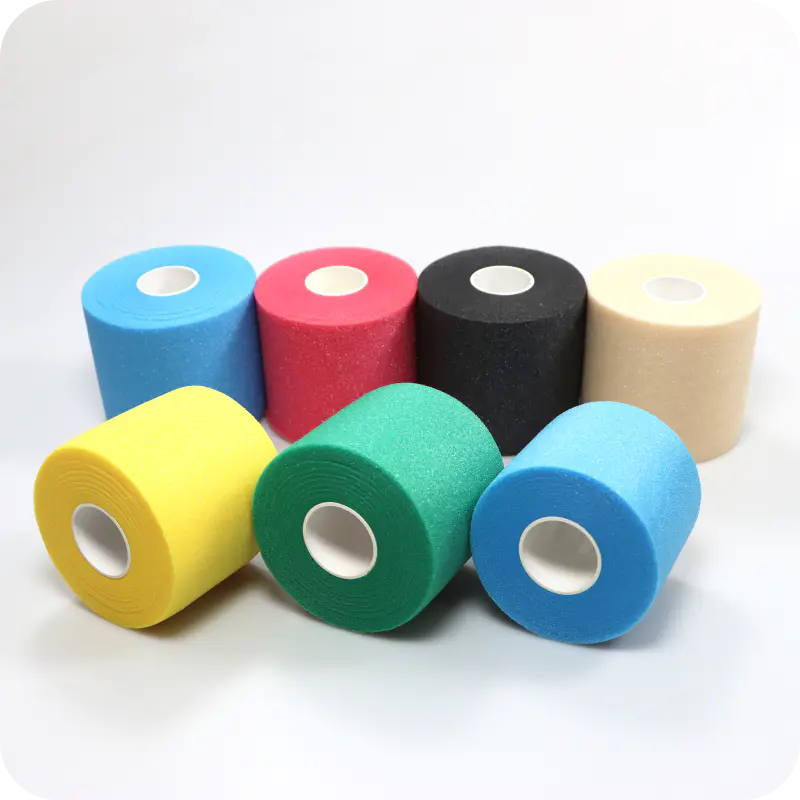
Underwrap for sports taping, wound dressing |
The structure also matters. Some bandages have reinforced edges to prevent fraying, locked edges to stop unraveling, or anti-slip coatings to keep the bandage in place. For example, PBT bandages with a locked edge are often used in situations where the bandage must remain stable under movement. The color and print options are relevant for market differentiation, especially in retail and sports applications.
Selecting the Right Bandage for Each Situation
Purchasing decisions in the medical and sports industries are rarely based on one feature. Buyers evaluate adhesive strength, stretch capacity, breathability, latex content, edge finish, and packaging. The right choice depends on the intended environment and the user’s needs.
- For wound care in clinics: choose a self-adhesive elastic bandage that provides moist but not wet conditions, easy removal, and low irritation.
- For sports injury prevention: select a compression-style bandage with consistent stretch and a firm hold that does not loosen after repeated movement.
- For rehabilitation support after surgery: look for a lightweight conforming bandage that allows the patient to move comfortably while still holding dressings in place.
- For finger injuries or contact sports: consider a finger protection bandage that stays on during training or gameplay.
- For users with sensitive skin: prefer latex-free or no-protein options to minimize allergic reactions.
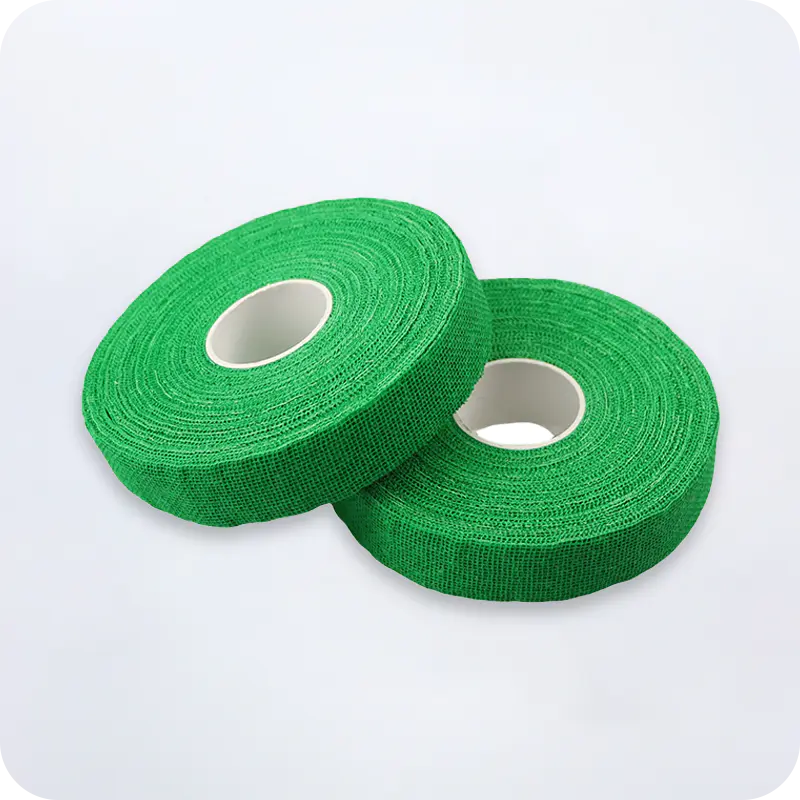
If the injury involves the fingers or small joints, a dedicated product can make a meaningful difference. A blue cotton breathable finger wrap bandage offers a snug fit and flexibility that a generic bandage cannot replicate.
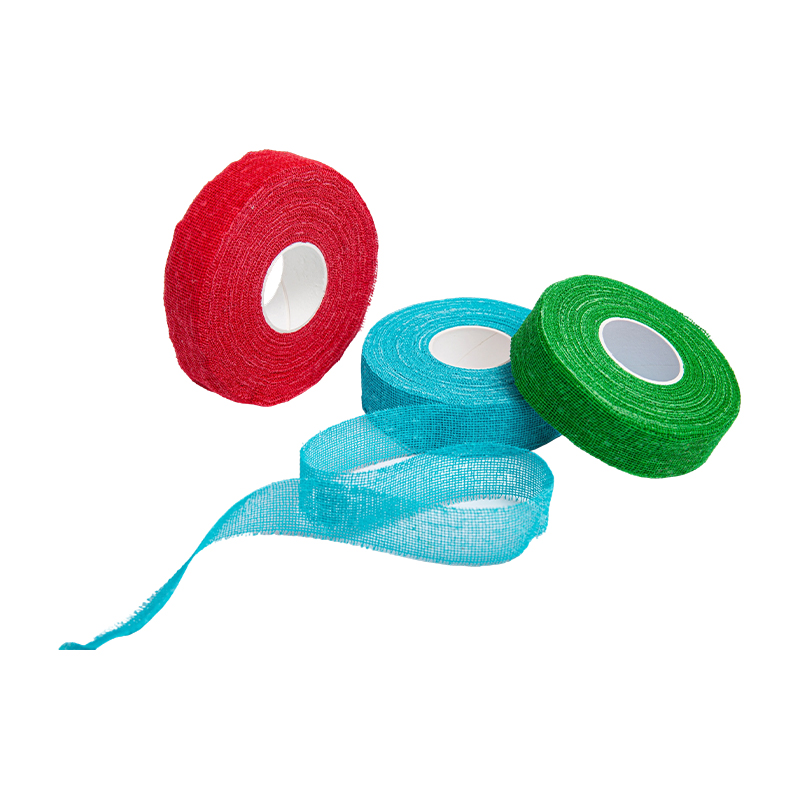 Breathable Cotton Finger Wrap Bandage with Moderate ElasticityThis knit cotton finger wrap balances comfort and flexibility, offering breathable moisture management and light cushioning for sports, work, and minor wound care.View Product →
FAQ: How Bandages Work in Practice
Q1: Should you bandage a cut or let it air out?
In most cases, bandaging a cut is better. A moist wound environment speeds up cell migration and reduces the risk of infection. Letting a wound dry out can cause a rigid scab that slows healing and increases scarring.
Q2: Why do some bandages stick to themselves while others need a tape or clip?
Self-adhesive bandages use a medical-grade adhesive coating on the outer layer, so the bandage sticks only to itself and not to the skin. This makes them easy to apply and remove. Standard elastic bandages may need clips or tape to stay secured.
Q3: Can bandages reduce swelling?
Yes, when the bandage is applied with enough compression. The elastic pressure helps prevent fluid build-up and supports the injured area. However, it is important to avoid excessive compression, which could impair blood flow.
Q4: How often should you change a bandage?
Change the bandage whenever it becomes wet, soiled, or loose. For minor cuts, a daily change is usually sufficient. For wounds with more drainage, you may need to change it more frequently.
Q5: Are latex-free bandages always better?
Not necessarily, but they are essential for people with a latex allergy. Latex-free and no-protein options reduce the risk of allergic reactions while still providing strong adhesion and stretch.






 English
  русский
  Français
  Español
  عربى
عربى 

 ENG
ENG