Self-adhesive elastic bandages are self-adhesive and elastic medical dressings primarily used to bandage and protect wounds, promoting wound healing. Their primary functions include securing and protecting wounds, preventing bacterial intrusion, and promoting wound healing. Self-adhesive elastic bandages are typically made of high-quality elastic materials and medical adhesives. They typically consist of a multi-layered structure, including a wound-contacting dressing layer, a middle elastic layer, and an outer protective layer.
Shanghai Qinghong Healthcare Products Co., Ltd. located in Jiading District, Shanghai, is a leading manufacturer and supplier specializing in high-quality elastic bandages and athletic tape. Jiangsu Qinghong Healthcare Products Co., Ltd., headquartered in Suqian City, Jiangsu Province, has been committed to providing high-quality self-adhesive bandages, kinesiology tape, and cotton athletic tape to customers worldwide since its establishment in 2018. Leveraging strong R&D capabilities, stringent quality control, and customer-centric service, we have become a trusted partner in the industry.
Empowering Athletes to Confidently Push Their Limits
Our kinesiology tape delivers dynamic support, enabling unrestricted free movement while effectively enhancing muscle function and blood circulation. Our sports bandages, on the other hand, provide reliable fixation and stability for joints during high-intensity activities, effectively preventing sprains and strains. From sports enthusiasts to professional athletes, we offer trustworthy professional protection for both training and competitions.
Please feel free to contact us when you need us! Whether you want
to become our partner or need our professional guidance or support
in product selection and problem solving, our professional team is
always ready to help you.
Home / Knowledge&Blog / Industry News / How Often Should You Change a Bandage? A Wound-Type Guide to Safe Dressing Intervals
Industry News
konw more about us
Home / Knowledge&Blog / Industry News / How Often Should You Change a Bandage? A Wound-Type Guide to Safe Dressing Intervals
Posted by Qinghong
How Often Should You Change a Bandage? A Wound-Type Guide to Safe Dressing Intervals
Why Bandage Change Frequency Is Not the Same for Every Wound
A single rule of thumb rarely applies across every type of injury. A shallow scrape, a post-surgical incision, and a compression wrap used during sports activity all heal under different conditions, and each produces a different amount of exudate, friction, and moisture buildup underneath the covering. Understanding how often a bandage needs to be changed starts with understanding what is happening beneath it, not simply counting hours on a clock.
Wound care specialists generally divide the healing timeline into four overlapping phases: hemostasis, inflammation, proliferation, and remodeling. During the earlier phases, fluid output is higher and bacterial risk is greater, which is why change frequency tends to be higher in the first few days and gradually decreases as the tissue stabilizes.
Quick takeaway: Most minor wounds need a fresh covering every 24 to 48 hours, while wraps used for support or compression, such as a self adhesive elastic bandage, can often stay in place longer if they remain dry, snug, and free of odor.
How Often to Change a Bandage Based on Wound Type
The table below outlines general starting points used in home care and outpatient settings. These are reference intervals rather than fixed rules, and a clinician's instructions for a specific wound should always take priority.
Wound or Application Type
Typical Change Interval
Primary Reason
Minor cut or abrasion
Every 24 hours
Keep debris and bacteria out while surface heals
Post-surgical incision
As directed, often 24 to 72 hours
Monitor for drainage and early infection signs
Moderate exudate wound
Every 1 to 2 days
Prevent saturation and skin maceration
Chronic or slow-healing wound
Every 2 to 3 days or per care plan
Balance moisture retention with monitoring needs
Sports or joint support wrap
Daily to every few days if kept dry
Maintain compression consistency and hygiene
Wraps used purely for support, taping, or light compression differ from wound dressings because they are not always covering broken skin. A wrap applied over intact skin for joint stability can typically be reused across a training session and changed once it loses tackiness or elasticity, rather than on a strict daily schedule.
Comparing Change Intervals Across Wound Types
The horizontal chart below visualizes the same intervals from a duration perspective, making it easier to see which categories require the most frequent attention.
Signs a Bandage Needs to Be Changed Right Away
Even with a set schedule, certain signals mean a covering should be replaced immediately regardless of how much time has passed since the last change.
Visible soaking through to the outer layer, which reduces the barrier's ability to block bacteria
Edges lifting or curling, allowing debris and moisture to enter from the sides
Increasing redness, warmth, or swelling around the wound margin
A new or worsening odor beneath the dressing
Itching combined with visible skin irritation from adhesive contact
The material becoming loose enough that it no longer provides even, consistent pressure
Any combination of warmth, spreading redness, and odor together is a stronger signal than any single symptom alone, and typically warrants both a dressing change and a check-in with a healthcare provider.
How Bandage Material Affects How Long It Can Stay On
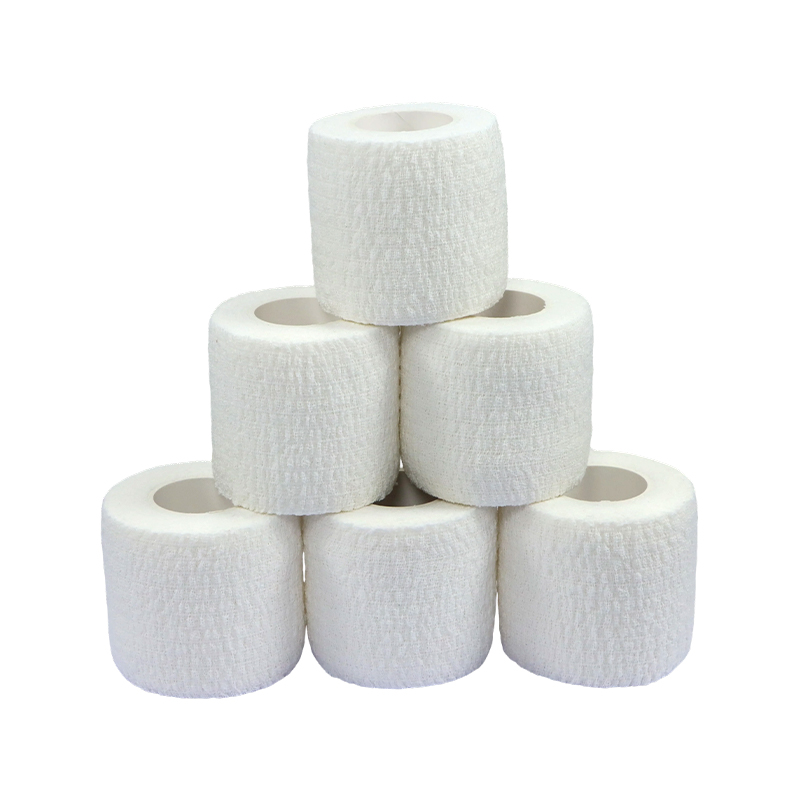
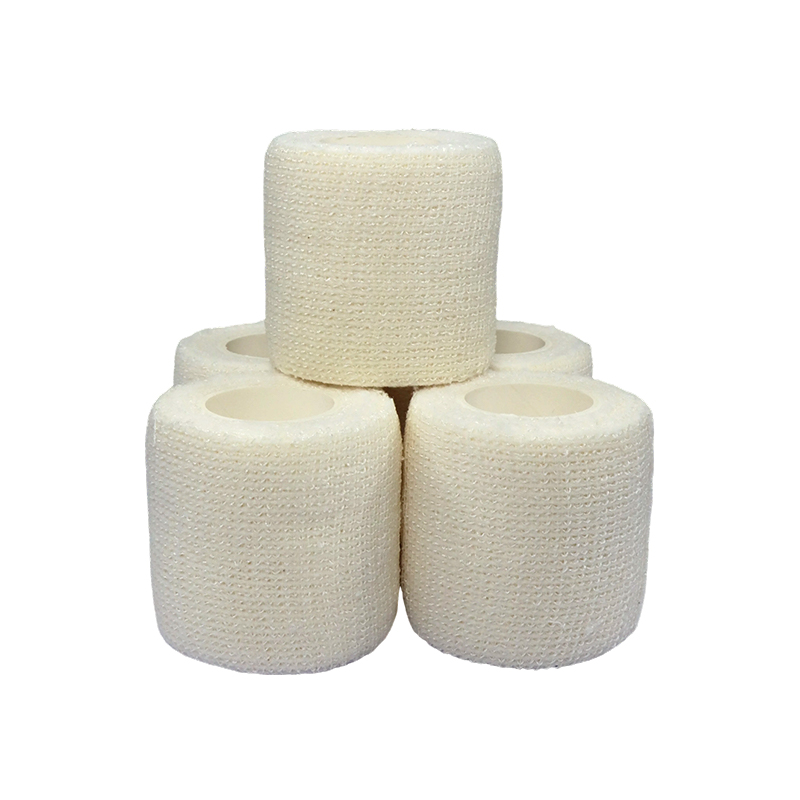
The material of the covering itself plays a large role in how often it realistically needs replacing. Woven gauze tends to fray and loosen faster, while a non-woven elastic cohesive bandage is designed to cling to itself rather than to skin or hair, which helps it hold tension longer without slipping.
Because these wraps do not rely on adhesive contact with skin, they are less prone to the edge-lifting problem common with tape-based dressings. That said, moisture, sweat, and repeated flexing at a joint still shorten the practical wear window compared with a wrap left undisturbed on a stationary body part.
BreathableSelf-clingingReusable within limitsLatex-free options available
Property Comparison: Elastic Cohesive Wrap vs Standard Woven Wrap
The radar chart below compares general characteristics that influence change frequency, based on typical material behavior rather than any single manufacturer's specification.
Elastic cohesive wrapStandard woven wrap
How to Change a Bandage Correctly and Hygienically
Wash hands thoroughly or use a hand sanitizer before touching the wound area.
Loosen the old covering slowly, following the direction of hair growth, rather than pulling straight up.
If any layer sticks to the wound bed, moisten it lightly instead of forcing it off.
Inspect the wound for color, drainage, swelling, and odor before covering it again.
Clean the surrounding skin as instructed, then allow it to air-dry briefly.
Apply the new dressing or wrap with even, moderate tension, avoiding pressure points.
Dispose of the used material properly and wash hands again afterward.
For wraps that are self-clinging rather than adhesive, applying with slightly overlapping layers helps maintain consistent pressure without needing pins or clips, which reduces the chance of an uneven or overly tight section.
What Happens When a Change Is Delayed
The line chart below illustrates a general pattern seen when a dressing is left in place well beyond its recommended interval: bacterial risk does not increase evenly, it accelerates once moisture builds up.
This pattern is one of the strongest arguments for treating change frequency as a range rather than a maximum. Waiting an extra day beyond a recommended window on day two or three carries far less risk than the same one-day delay on day five or six, once the dressing has already absorbed significant moisture.
Change Frequency by Care Setting
Environment also matters. The column chart below compares typical weekly change counts across common settings, reflecting differences in activity level, sweat exposure, and monitoring access.
Sports facilities show the highest weekly change count largely because wraps are exposed to repeated sweat and friction cycles during training, while occupational settings often use support wraps over clothing or gloves, extending the practical wear time between changes.
Practical Habits That Extend Safe Wear Time
A few consistent habits can meaningfully extend how long a covering stays effective without compromising hygiene:
Keep the area dry during activities like bathing by covering it with a waterproof layer
Avoid re-tightening a wrap over the same crease repeatedly, which weakens the material
Store unused rolls in a cool, dry place so they retain their cling and elasticity
Rotate wrap direction slightly on reapplication to avoid concentrated pressure lines
Replace immediately after any exposure to standing water, dirt, or visible contamination
These habits matter most for wraps intended for repeated use across a day or a training session, where wear time is measured in cumulative hours of contact rather than a single continuous period.
Frequently Asked Questions
Q1: How often should you change a bandage on a fresh cut?
For most minor cuts, changing the covering once every 24 hours is a reasonable starting point, with earlier changes if it becomes wet, dirty, or visibly soaked through.
Q2: Can a support wrap be left on overnight?
A wrap used purely for joint support over intact skin can often be left on overnight if it is not causing numbness, tingling, or discoloration, but it should still be checked and loosened if circulation feels restricted.
Q3: How often to change bandages on a wound that is still draining?
Wounds with active drainage typically need more frequent changes, often once or twice daily, until drainage decreases and the surrounding skin stays dry between changes.
Q4: Does a cohesive wrap need to be changed as often as a taped dressing?
Not necessarily. Because a cohesive wrap clings to itself rather than to skin, it tends to hold position longer without the edge-lifting that shortens the effective wear time of adhesive tape dressings.
Q5: What is the maximum time a bandage should stay on before checking it?
Even with longer-wear materials, a general check at least once every 48 to 72 hours is advisable, since visual monitoring is important even if a physical change is not yet needed.
Q6: Is it normal for a wrap to feel looser after a day of use?
Some loosening is expected as swelling changes and the material relaxes slightly with movement, but a wrap that feels noticeably slack should be reapplied rather than left as is.






 English
  русский
  Français
  Español
  عربى
عربى 

 ENG
ENG