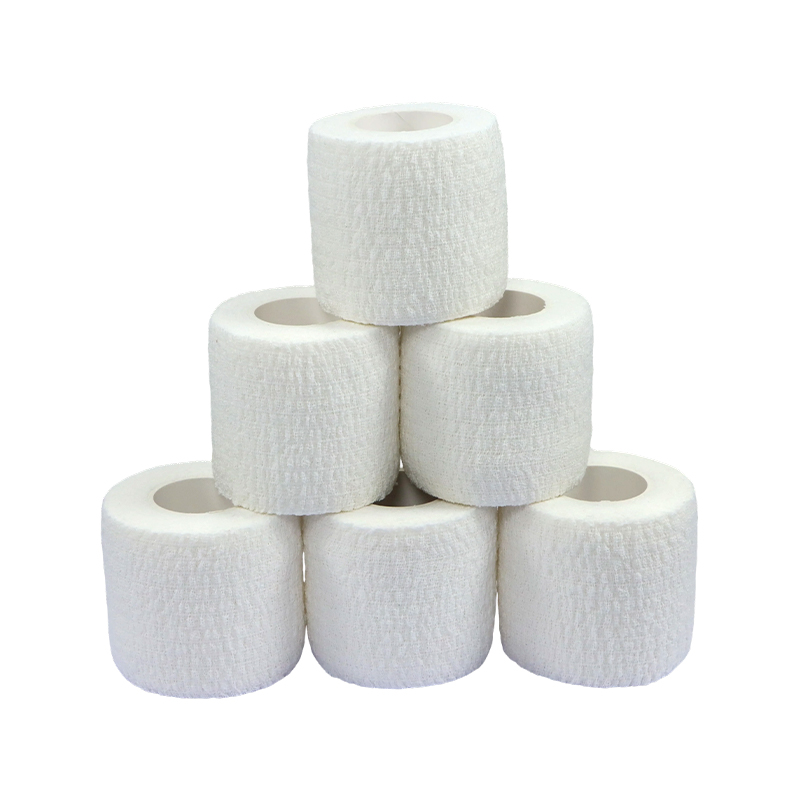
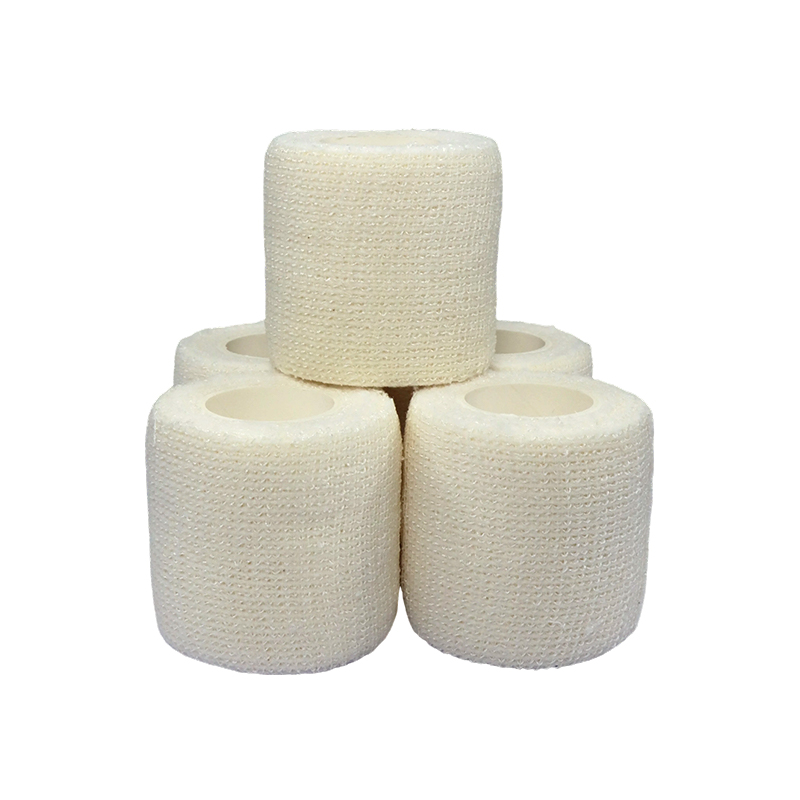
A self adhesive elastic bandage is a widely used flexible compression and fixation material found in both medical and athletic scenarios. Whether supporting muscles during sports, securing dressings after minor injuries, or providing controlled compression for swelling management, its performance depends heavily on its substrate. The substrate, which is typically categorized as non-woven or woven, forms the foundational layer onto which cohesive adhesives and elastic yarns are added.
Understanding the structure of a self adhesive elastic bandage
The basic components of the bandage
A typical self adhesive elastic bandage consists of three fundamental layers:
- Substrate layer (non-woven or woven): The foundational material that defines most physical attributes.
- Elastic component: Often integrated within the substrate or applied as part of the manufacturing process to provide stretch.
- Cohesive coating: Applied to the surface to allow the bandage to adhere to itself without sticking to skin or hair.
Among these layers, the substrate plays the most significant role in determining the bandage’s mechanical strength, stretch ratio, softness, and user experience.
Why substrate selection matters
The substrate influences how the bandage performs under tension, how long it can maintain compression, and how comfortable it is during extended wear.
The characteristics of non-woven substrates
Material composition and structure
Non-woven substrates are typically made using fibers bonded through heat, chemical processes, or mechanical entanglement. They are not arranged in a uniform pattern, creating a surface that is soft, flexible, and slightly fuzzy, which improves cohesive adhesion.
Key functional advantages
Non-woven substrates contribute the following functional benefits:
- Soft texture: Provides enhanced comfort during prolonged use, making it popular in clinical settings.
- Consistent stretch: Uniform mechanical behavior due to fiber bonding across the sheet.
- Lightweight feel: Beneficial for delicate applications requiring gentle pressure.
- Improved conformity: Non-woven materials contour easily to irregular body areas.
- Enhanced cohesive performance: Fiber density improves surface grip, allowing the bandage to stick to itself effectively.
These attributes make non-woven options preferred for pediatric applications, sensitive skin, and general-purpose medical use.
Limitations of non-woven substrates
Despite their advantages, non-woven substrates also come with several limitations:
- Lower tensile strength compared to woven fabrics.
- Reduced durability under high-intensity movement.
- Slightly higher susceptibility to surface fuzzing or pilling.
For these reasons, non-woven variants of self adhesive elastic bandage are ideal for controlled compression but not for scenarios requiring high mechanical resistance.
The characteristics of woven substrates
Structure and material alignment
Woven substrates are produced through an interlaced structure of warp and weft yarns. This construction gives the fabric a predictable strength pattern and higher resistance to tearing or distortion. The woven structure creates a smoother surface and a more robust mechanical response during stretching.
Functional advantages
Woven substrates provide several notable benefits:
- High tensile strength: Suitable for high-stress or sports-related applications.
- Better structural stability: Maintains performance even under repeated tension.
- Enhanced durability: Withstands prolonged use without distortion.
- Superior stretch recovery: Provides strong support for joints and muscle groups.
- Professional-grade performance: Often chosen for athletic cohesive bandage, compression wrap for sports, or heavy-duty self adhesive elastic bandage.
These attributes make woven bandages well-suited for athletes, physiotherapists, and users who require firm, reliable compression during dynamic movement.
Limitations of woven substrates
However, woven substrates face several constraints:
- Rougher texture compared to non-woven options.
- Slightly reduced ability to conform to small curves or irregular body shapes.
- Higher production cost due to weaving complexity.
Thus, woven substrates provide strength and durability but may sacrifice some softness and flexibility.
Comparison between non-woven and woven substrates
Side-by-side differences
| Feature |
Non-woven substrate |
Woven substrate |
| Texture |
Soft, gentle |
Firm, structured |
| Strength |
Moderate |
High |
| Elastic recovery |
Consistent but moderate |
Excellent |
| Conformability |
Very good |
Good but less adaptable |
| Durability |
Moderate |
High |
| Cohesive adhesion |
Strong due to fiber density |
Strong but more dependent on coating |
| Cost |
Generally lower |
Higher |
| Ideal use |
Medical general care, sensitive skin, light compression |
Sports, heavy use, joint support |
The role of substrate in stretch performance
Controlled stretch ratio
Both non-woven and woven substrates influence how much a self adhesive elastic bandage can stretch and how evenly tension is distributed. Non-woven substrates tend to offer homogeneous elasticity, whereas woven structures provide more controlled, directional stretch.
Comfort and pressure distribution
The substrate affects how pressure is applied to the skin. Non-woven options distribute pressure evenly across the surface, making them suitable for longer wear. Woven substrates, while firmer, offer targeted tension control ideal for sports compression.
Reducing slippage during use
A strong substrate improves slippage resistance, essential for maintaining compression levels. Woven substrates perform better during intense movement, while non-woven substrates rely more heavily on cohesive coating for staying in place.
The role of substrate in breathability and moisture control
Air circulation
Breathability is crucial for avoiding skin irritation and moisture buildup. Non-woven substrates provide natural air permeability due to their random fiber structure. Woven substrates also allow airflow but are more dependent on yarn density and weaving method.
Moisture wicking ability
A self adhesive elastic bandage must manage moisture generated during physical activity or extended wear. Non-woven materials generally absorb moisture more effectively, while woven fabrics maintain structure even in slightly damp conditions.
How substrate affects cohesive adhesion
Interaction with cohesive coating
The substrate surface must interact correctly with cohesive adhesive to ensure proper self-adherence. Non-woven surfaces provide more micro-grip points due to their fibrous texture. Woven surfaces offer a more consistent and predictable adhesion pattern.
Adhesive distribution and coating performance
Uniform adhesion helps prevent edge curling, maintaining a secure fit. The substrate determines how evenly cohesive adhesive spreads during production, which directly impacts performance in conditions such as sports training or medical dressing fixation.
The role of substrate in user comfort
Skin-feel and irritation factors
Non-woven substrates are often selected for their soft, skin-friendly texture. Woven bandages, intended for support, have a firmer touch but offer enhanced stability.
Flexibility during movement
Non-woven substrates flex naturally with body movement, reducing the risk of discomfort. Woven substrates maintain shape more strictly, providing structured support essential for stabilizing joints.
The manufacturing impact of substrate choice
Production complexity
Woven substrates require weaving equipment and longer processing time. Non-woven materials allow faster and more cost-efficient production. This difference influences pricing and supply chain decisions.
Consistency and quality control
Woven substrates offer predictable strength, allowing tight quality standards. Non-woven materials require careful bonding control to maintain consistent thickness and performance.
Application scenarios based on substrate type
Medical and general healthcare use
Non-woven self adhesive elastic bandage is preferred in:
- Primary wound dressing fixation
- Pediatric care
- Applications requiring gentle compression
- Disposable clinical use
Sports and high-intensity activities
Woven variants are preferred for:
- Joint support
- Muscle compression
- Sports taping alternatives
- Situations requiring durable elasticity
How substrate contributes to overall bandage functionality
Stability and performance
The substrate dictates the structural foundation of the bandage. Without an appropriate substrate selection, even the best cohesive adhesive cannot achieve optimal performance.
Durability during storage and use
The bandage must maintain shape, stretch, and cohesive strength during storage. Woven substrates perform exceptionally well in long-term stability, while non-woven substrates provide consistent comfort.
Compatibility with cohesive coatings
Substrate texture directly affects how cohesive adhesive bonds. Non-woven materials integrate well with adhesive due to their fiber irregularities, while woven options require more precise coating techniques.






 English
  русский
  Français
  Español
  عربى
عربى 

 ENG
ENG