You have cleaned the wound, placed a sterile pad, and now comes the moment that decides whether the dressing stays in place for the next 24 hours: anchoring the gauze. Medical tape for gauze has to hold the pad against moving skin, resist sweat and friction, and still come off without turning the surrounding tissue red. The right choice depends on the wound location, the wear time, and the patient's skin condition.
This guide explains how medical tape for gauze works, the main tape families used in hospitals, clinics and first-aid kits, how to apply and remove tape correctly, and what to check before buying fixation products in volume.
Why the Right Medical Tape for Gauze Matters
A gauze dressing is only as stable as its fixation. If the pad shifts during movement, it rubs against the wound bed, slows healing, and creates a pathway for bacteria. Medical tape for gauze is designed to keep the dressing in position while allowing moisture vapour to escape from the skin surface.
The clinical challenge is the balance between holding power and skin protection. Tapes with very aggressive adhesives can strip the outer layer of the epidermis on removal, a particular risk for older patients and thin, fragile skin. Weak tapes, on the other hand, lift at the edges, catch on clothing, and expose the wound to contamination long before the next scheduled dressing change.
A practical rule from dressing suppliers: choose the lowest adhesion that will hold the gauze still for the intended wear time. Stronger adhesion is not a benefit when it damages the skin underneath.
For bulk buyers, including distributors, hospitals and sports-medicine programmes, tape performance directly affects patient comfort, dressing change frequency, and the rate of skin complications reported back to the purchasing team.
Main Types of Medical Tape for Gauze
The backing material determines how a tape behaves: how much it stretches, how well it breathes, how firmly it adheres, and how gently it releases. These five types cover most gauze-fixation needs in medical and first-aid settings.
Table 1. Comparison of common medical tape options for securing gauze dressings
| Tape type |
Adhesion |
Breathability |
Water resistance |
Best use with gauze |
| Paper (micropore) |
Moderate |
High |
Limited |
Sensitive skin, low-exudate wounds, frequent changes |
| Cloth (zinc oxide) |
Strong |
Low |
Moderate |
Joints and active areas needing firm hold |
| Silk / polyurethane |
Moderate to strong |
Medium |
Good |
Moving areas, longer wear times |
| Nonwoven cohesive |
Self-adhesion |
High |
Moderate |
Fingers and limbs where adhesive should not touch skin |
| PBT elastic bandage |
Mechanical hold |
High |
Variable |
Large dressings under light compression |
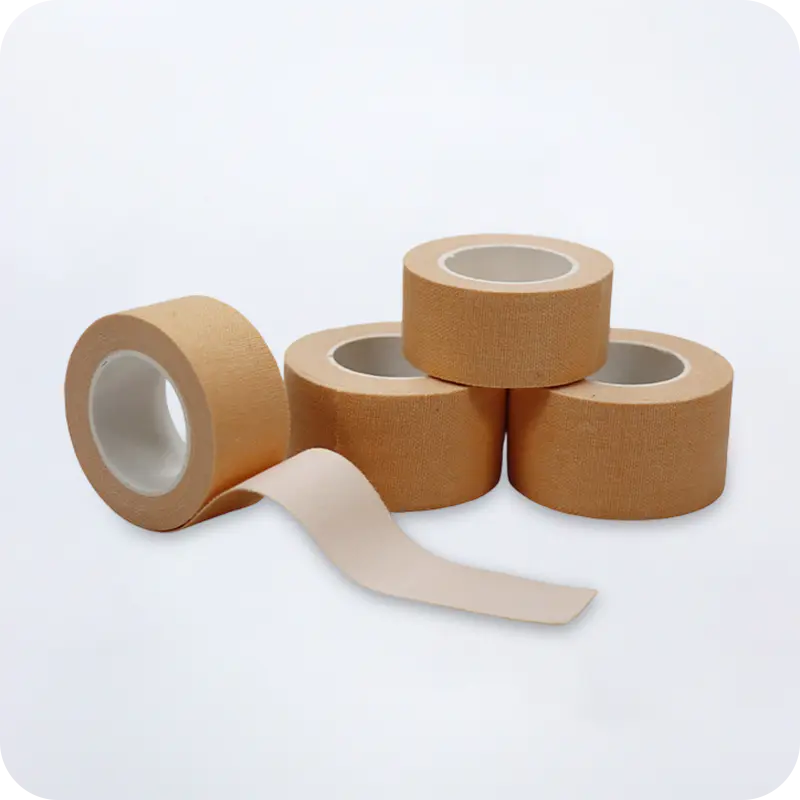
Paper tape remains the most common general-purpose option: it is inexpensive, breathable, and gentle on intact skin. Cloth tape provides the holding force needed on joints or over bulky padding. Nonwoven cohesive bandages have become a popular alternative because they stick to themselves instead of the skin, so removal does not pull hair or leave sticky residue.
How to Choose Medical Tape for Gauze
Four factors should guide the selection: adhesion strength, breathability, moisture behaviour, and removal characteristics.
Match adhesion to the wound location
Knuckles, elbows, knees and shoulders move constantly, so dressings in these areas need tape with decent shear strength. Flat areas such as the abdomen or forearm can use a gentler paper tape without losing fixation overnight.
Check breathability and moisture accumulation
A fully occlusive tape traps sweat under the dressing. The moisture softens the skin, encourages bacterial growth, and makes the adhesive bond stronger than intended. For dressings worn for more than a few hours, choose a backing with high moisture-vapour transmission.
Plan for removal
Ask how the tape will be taken off. Silicone adhesives are gentler but cost more. Traditional acrylic and rubber-resin adhesives hold firmly but can leave residue on skin and hair. Cohesive wraps avoid the problem altogether, because the bandage adheres only to itself.
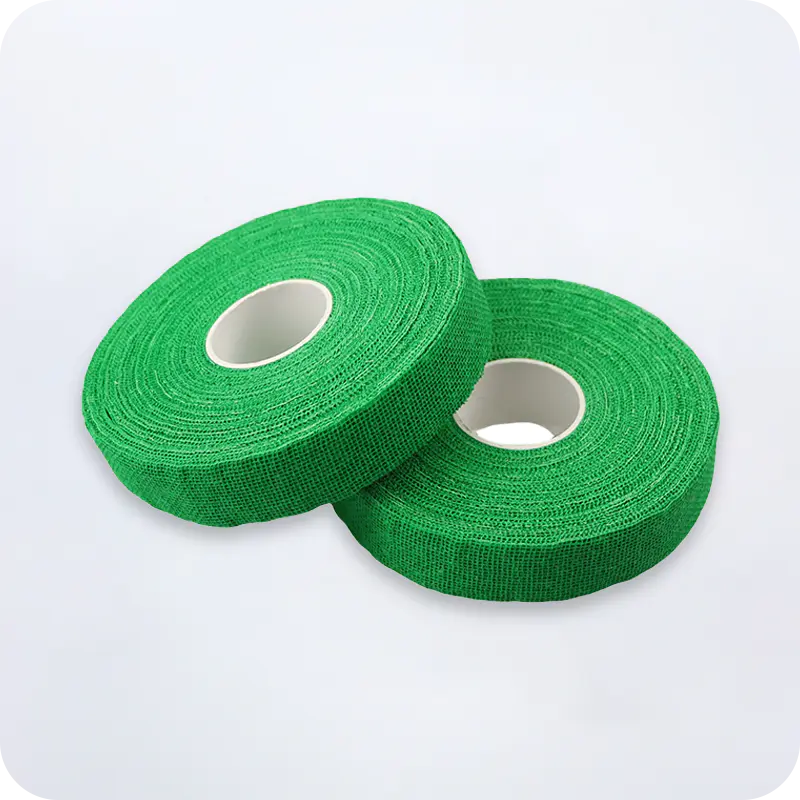
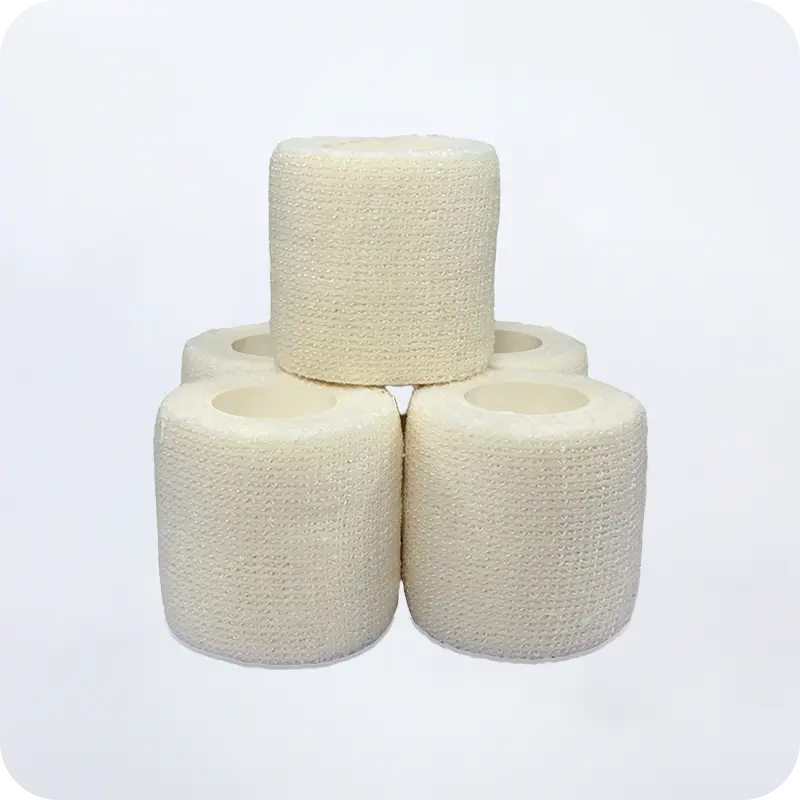
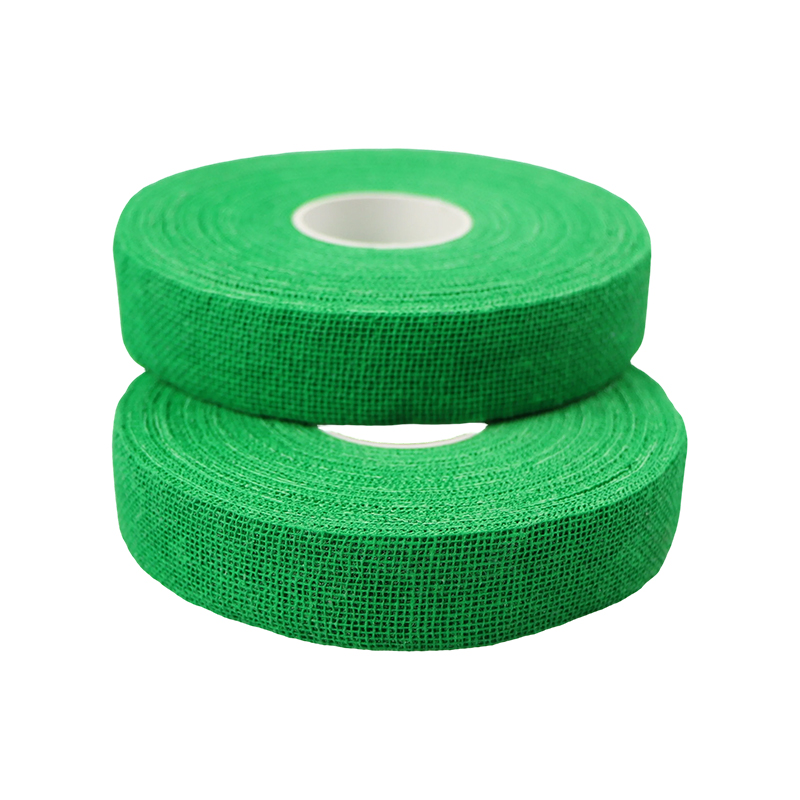
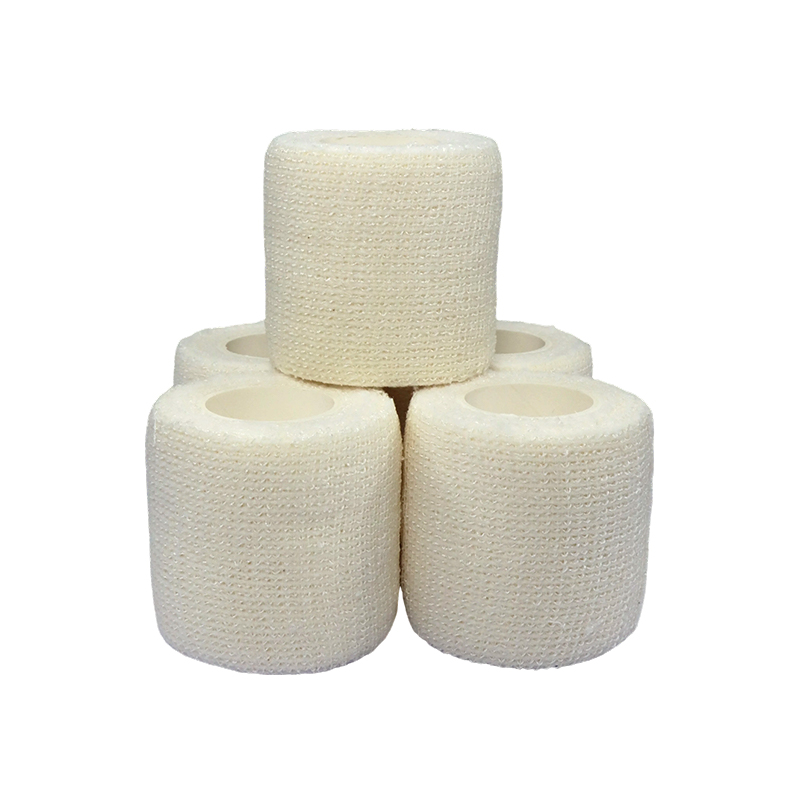
For dressings that must be changed several times a day on a hand, finger or ankle, a cotton self-adhesive elastic bandage keeps the gauze in place without repeated adhesive stripping of the surrounding skin.
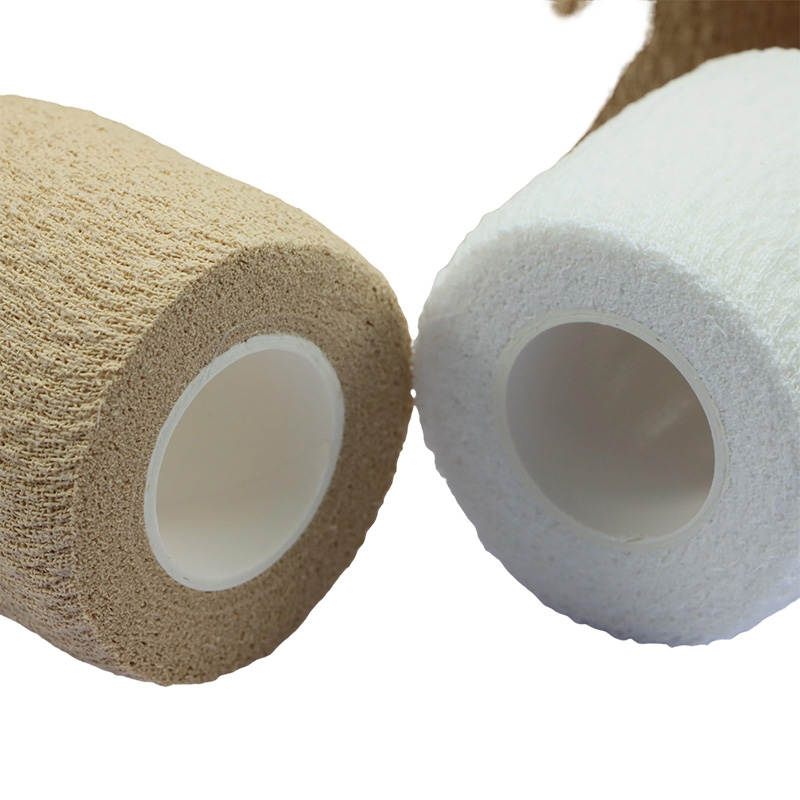 Skin-Colored Cotton Self-Adhesive Elastic Wrap for Sensitive AreasThis all-cotton bandage blends with skin tone and secures dressings without repeated adhesive stripping. Its self-adhesive design allows easy repositioning, making it ideal for frequently changed dressings on hands, fingers, or ankles.View Product →
How to Apply Medical Tape for Gauze Correctly
Good application technique prevents most tape-related skin problems. Follow these steps for a secure dressing.
- Clean and dry the skin around the wound. Remove cream, oil or sweat so the adhesive bonds to a dry surface.
- Cut tape strips long enough to extend beyond the gauze edges on both sides, normally 3 to 5 cm.
- Place the sterile gauze without touching the wound bed itself.
- Lay the tape over the gauze without stretching it. Stretched tape pulls the skin and causes blisters when the limb moves.
- Press the tape from the centre towards the edges to remove air bubbles and create an even seal.
- For joints, anchor the tape parallel to the limb axis or use a spiral pattern so movement does not detach it.
The full dressing sequence, from cleaning to final fixation, is described in our step-by-step guide to bandaging a wound with gauze.
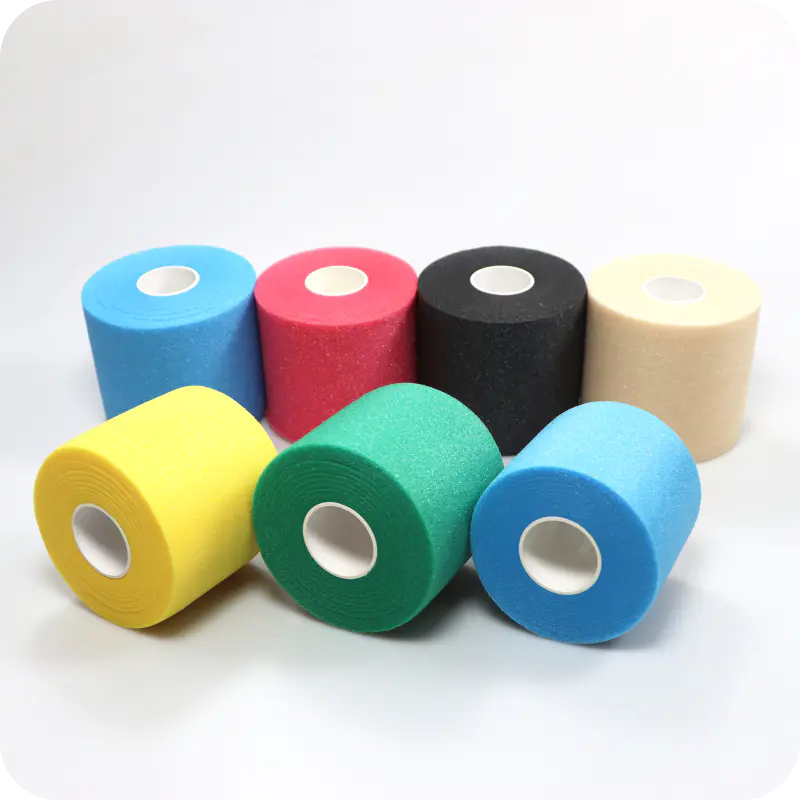
When the wound is large or needs light compression, place a medical PBT elastic bandage over the primary tape and gauze. The stretch conforms to muscle contours and maintains even pressure without restricting circulation.
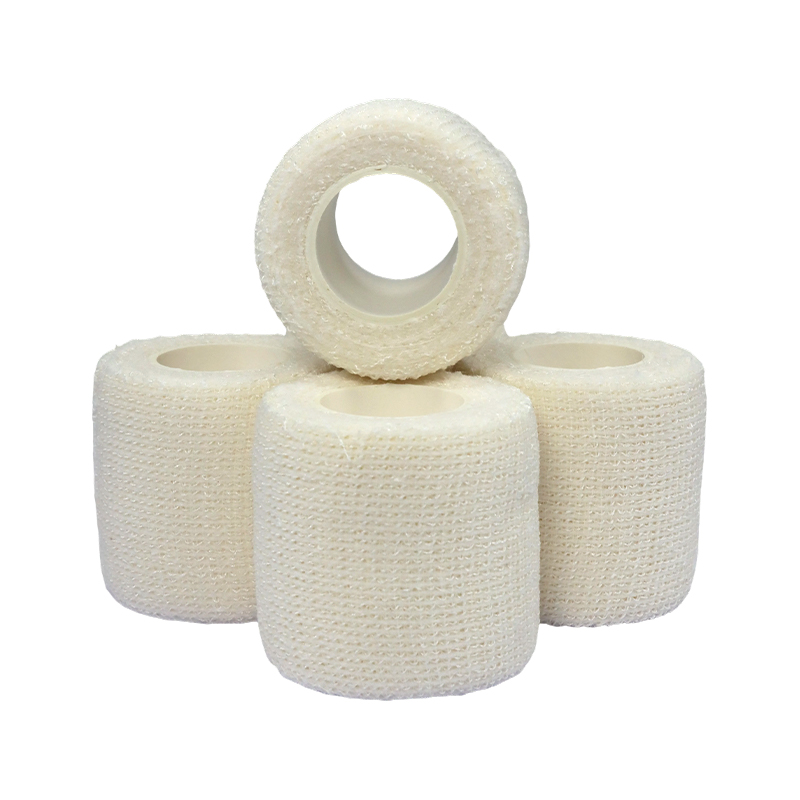 Medical PBT Elastic Bandage for Even Pressure and Gentle SupportMade from high-performance PBT fiber, this latex-free bandage distributes pressure uniformly to reduce swelling and support recovery. It suits post-operative fixation, joint protection, or chronic edema, offering stable elasticity without restricting circulation.View Product →
How to Remove Medical Tape Safely
- Peel the tape back on itself, parallel to the skin, rather than pulling it away at a steep angle.
- Remove in the direction of hair growth whenever possible.
- Press the skin down with one finger while peeling to reduce tension on the epidermis.
- If the tape resists, apply warm water or a silicone-based adhesive remover and wait a few seconds.
- Clean residual adhesive with oil or remover; avoid alcohol, which dries and irritates the skin.
Slow removal is the single most effective way to prevent skin tears, especially for elderly patients and children.
Common Mistakes to Avoid with Medical Tape for Gauze
- Using household adhesive tape. It does not breathe, its adhesive is not intended for skin contact, and it leaves difficult residue.
- Wrapping the tape too tightly around a finger or limb. Tight circumferential tape can block blood flow; numbness or coldness means the tape is too tight.
- Stretching the tape during application. This creates shear forces and leads to blisters.
- Leaving the tape on beyond its intended wear time. Moisture trapped under the backing can cause maceration and fungal growth.
- Ignoring a known contact allergy. Zinc oxide and latex are common triggers; switch to a nonwoven, latex-free cohesive product if redness appears in the tape pattern.
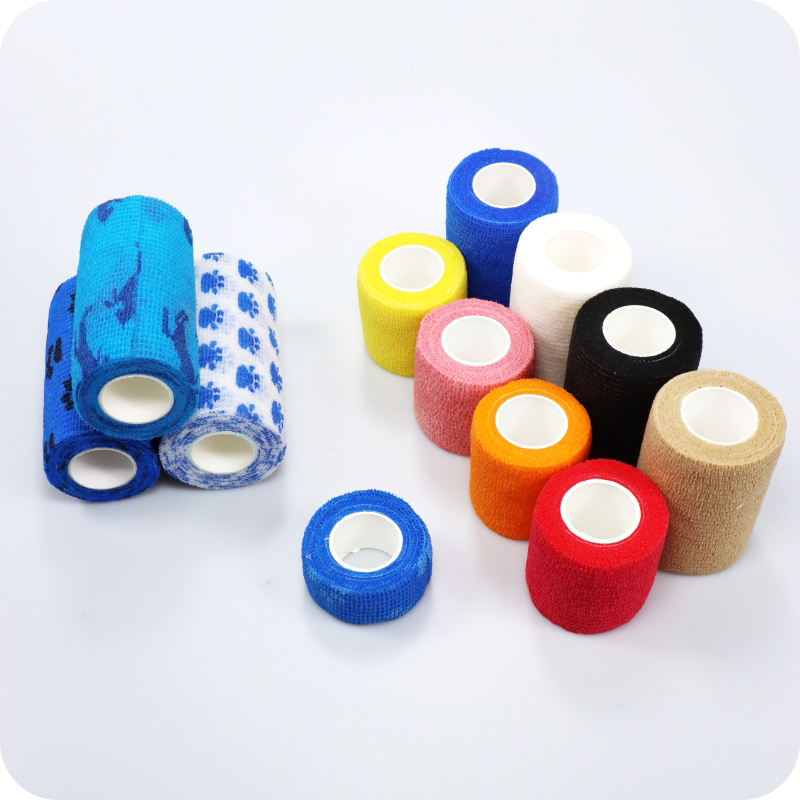
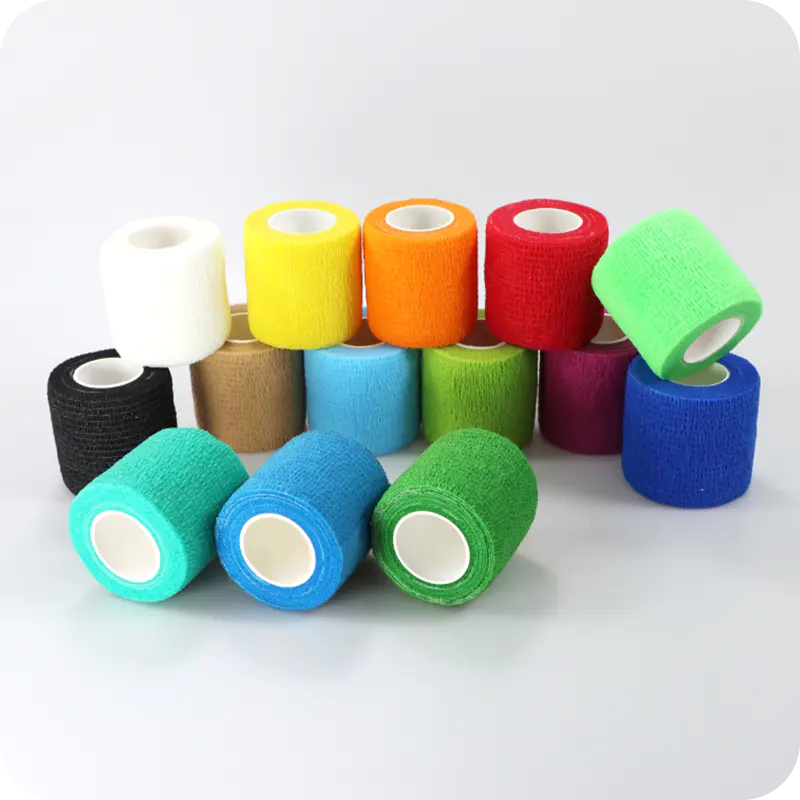
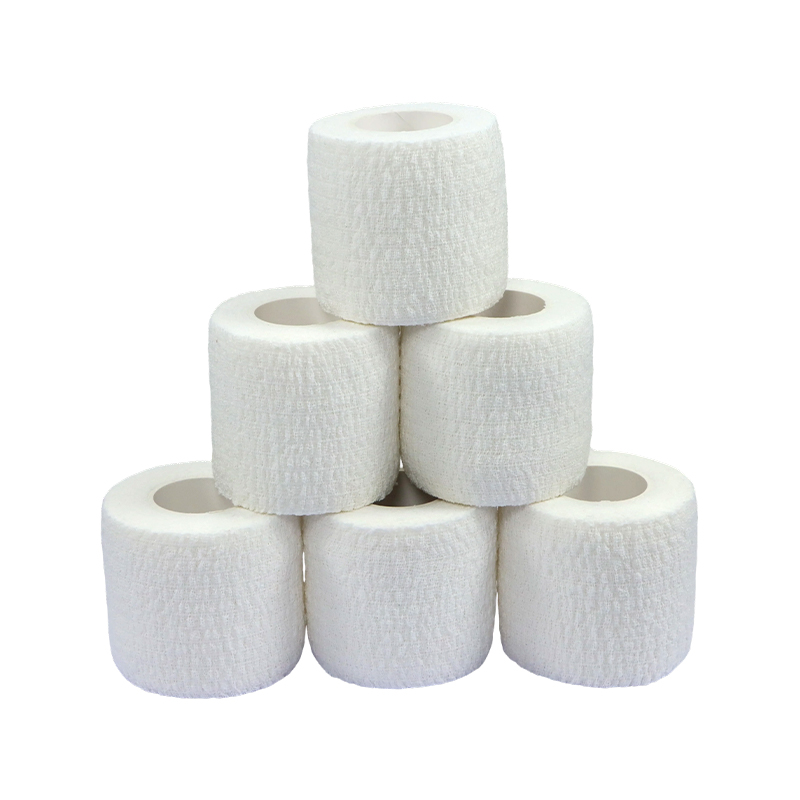
For sensitive-skin patients and latex-sensitive buyers, solid-color nonwoven self-adhesive bandages provide a fixation layer that never exposes the skin to an aggressive adhesive.
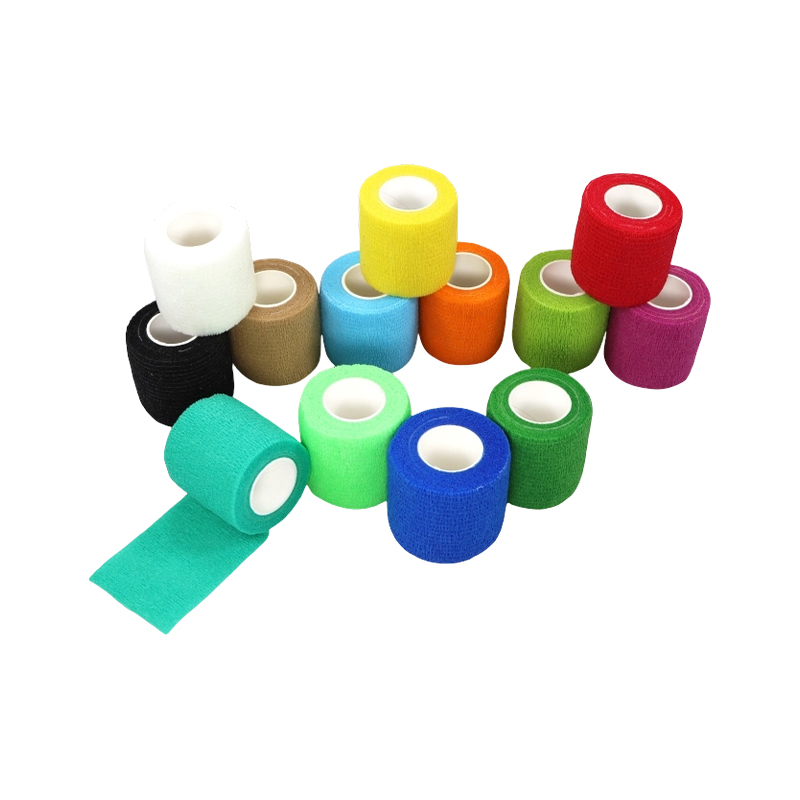 Solid Color Non-Woven Self-Adhesive Bandage with Latex-Free OptionA breathable, lightweight elastic bandage from non-woven fabric and spandex that sticks securely without fasteners. With optional non-latex adhesive, it protects sensitive skin while providing flexible support for sports injuries or light compression.View Product →
What to Check When Buying Medical Tape for Gauze in Volume
Procurement teams and distributors evaluating tape suppliers should verify more than the unit price. Adhesion consistency between batches matters: a tape that holds perfectly in one production run and peels off in the next creates returns and complaints. Confirm that the manufacturer can document batch-to-batch controls and provide certificates for the relevant medical-device standards.
Latex-free variants should be available for the growing number of patients with latex sensitivity. Custom widths, printed rolls and private-label packaging are common requirements for distributors who want a consistent shelf identity. Finally, check production capacity and lead times, since gauze fixation tape is a steady-consumption item that hospitals reorder on a fixed schedule.
Qinghong Medical manufactures cotton and nonwoven cohesive bandages, PBT bandages and sports tapes for export markets, with factory-level quality documentation available to buyers on request. Institutional buyers can also review how fixation tapes and elastic bandages fit into a broader wound-care range in our medical care solutions overview.
Frequently Asked Questions
Q1: Can I use normal household tape to hold gauze in place?
No. Household tapes are not breathable and their adhesives are not designed for skin. They can cause irritation, maceration and painful residue. Always choose a medical tape for gauze that is designed for skin contact.
Q2: How long can I leave medical tape on the skin?
Most paper and nonwoven tapes are intended for one to three days. Check the label and inspect the skin at every dressing change. Leaving tape longer increases moisture retention and the risk of irritant dermatitis.
Q3: What is the gentlest option for sensitive skin?
Low-adhesion paper tape is usually the first choice. For frequent dressing changes or fragile skin, a cohesive wrap that sticks only to itself is gentler, because nothing is peeled away from the skin surface.
Q4: Why does the skin stay red after tape removal?
Redness can come from mechanical stripping, adhesive allergy, or trapped moisture. If the redness follows the exact shape of the tape, try a hypoallergenic or cohesive option. Persistent or worsening reactions should be checked by a healthcare professional.






 English
 русский
 Français
 Español
 عربى


 ENG